Author: Admin

  • Euro vs Dollar: What Decides the Exchange Rate and Why It Matters

    Euro vs Dollar: What Decides the Exchange Rate and Why It Matters

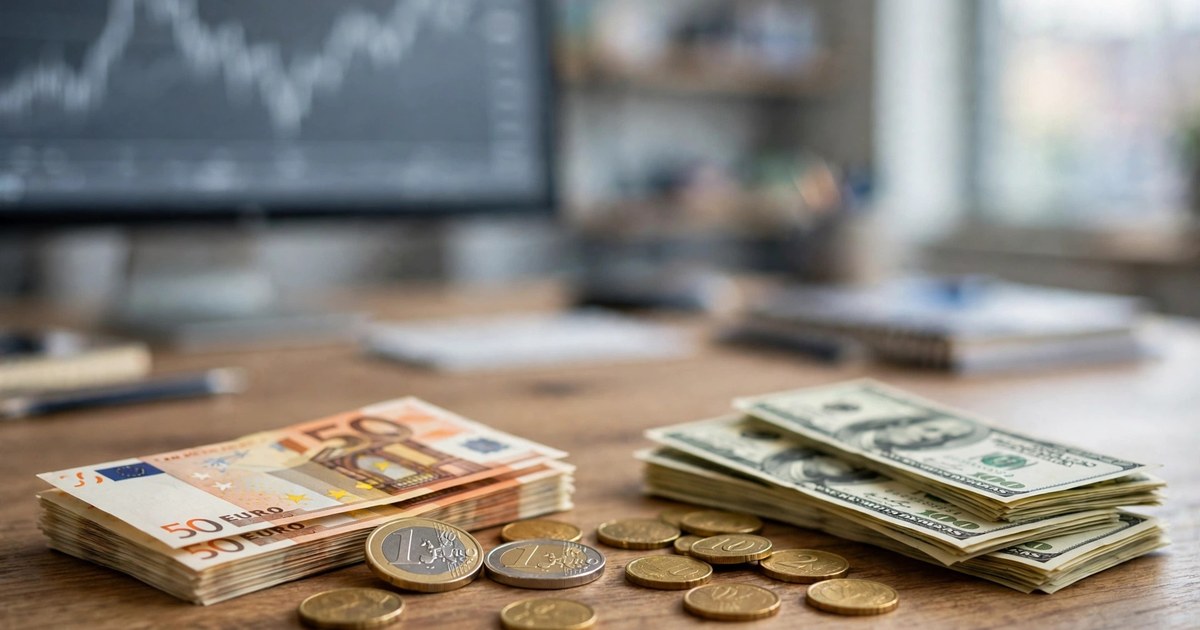
    Few numbers in European life are quoted as often, and understood as incompletely, as the euro-dollar exchange rate. When news reports say "the euro rose against the dollar" or "the euro fell to parity", they are describing a price: how many US dollars one euro buys. That price moves almost every second of the working week, and behind the movement lies a contest between interest rates, economic growth, energy prices, politics and investor mood. The rate matters far beyond currency traders. It shapes the price of fuel and food in Europe, the competitiveness of European exporters, the cost of holidays, and the value of savings and remittances. This explainer sets out what actually decides the euro-dollar rate, why it sometimes moves sharply, and how ordinary people should — and should not — react to it.

    A short background: one currency, many economies

    The euro was launched in 1999 for electronic payments and entered pockets as notes and coins in 2002. It is now the official currency of 20 EU member states, home to roughly 350 million people, and the second most used currency in the world after the US dollar. The dollar, by contrast, belongs to a single country with a single government and a single central bank.

    That structural difference is the starting point for understanding the exchange rate. The European Central Bank (ECB) sets one interest rate for economies as different as Germany and Greece. The US Federal Reserve sets policy for one economy. When investors compare the euro and the dollar, they are comparing not just two central banks, but two very different political and economic systems — one unified, one federal but fragmented in fiscal policy.

    Factor one: interest rates and expected interest rates

    The single most powerful short-term driver is the difference in interest rates between the ECB and the Federal Reserve, and — just as important — where markets expect those rates to go next. Money flows toward higher returns. If the Federal Reserve is raising rates while the ECB is holding steady, holding dollars becomes more rewarding, demand for dollars rises, and the euro tends to weaken. If markets begin to expect US rate cuts or European rate rises, the flow can reverse quickly.

    This is why exchange rates often move on a single sentence from a central bank president. Traders are not reacting to today’s rate, which is usually already known, but to hints about the path ahead. A surprisingly strong US jobs report can strengthen the dollar within minutes, not because jobs themselves change currency demand that day, but because they change expectations about what the Federal Reserve will do next.

    Factor two: growth, inflation and economic data

    Over longer periods, relative economic performance matters. A euro area growing steadily, with inflation under control, attracts investment into European shares, bonds and businesses, and that investment must be bought with euros. Weak growth, recession fears or stubborn inflation have the opposite effect.

    Inflation deserves special attention because it cuts both ways. Moderate, controlled inflation alongside growth can support a currency if it leads the central bank to keep rates higher. High inflation that a central bank appears unable or unwilling to control damages confidence, because it erodes the future purchasing power of money held in that currency. Investors watch inflation data, growth figures, unemployment and business surveys from both sides of the Atlantic, and the side that surprises positively usually sees its currency gain.

    Factor three: energy and the terms of trade

    Europe imports most of its oil and much of its gas, and energy is priced globally, mostly in dollars. When energy prices spike, Europe must send more money abroad to pay for the same fuel — economists call this a deterioration in the terms of trade. That was a central reason the euro fell to parity with the dollar, and briefly below it, in 2022 after Russia’s full-scale invasion of Ukraine sent European gas prices soaring. The United States, a major energy producer, was far less exposed.

    The lesson generalises: shocks that hit Europe’s import bill or industrial competitiveness — energy crises, supply disruptions, droughts affecting agriculture — tend to weaken the euro, while shocks centred on the United States tend to weaken the dollar.

    Factor four: risk, politics and the dollar’s safe-haven role

    In global crises, investors often buy dollars even when the crisis starts in the United States, because dollar markets are the deepest and most liquid in the world and US government bonds are treated as the safest asset available. The euro benefits from Europe’s scale and institutions, but it carries a risk the dollar does not: the euro area is a union of sovereign states, and during the debt crisis of the early 2010s, fears that the currency itself might break apart pushed the euro sharply lower.

    Political uncertainty therefore weighs on the euro in a particular way. Elections that raise questions about a large member state’s finances or commitment to the EU, disputes over EU budgets, or doubts about support for a member state in difficulty can all weaken the currency even when economic data are unchanged. Conversely, moments of European unity — joint borrowing for recovery funds, for example — have historically strengthened confidence in the euro.

    What a stronger or weaker euro means in daily life

    A weaker euro makes imports more expensive. Fuel, electronics, coffee, and anything priced in dollars costs more in euro terms, which can add to inflation. Holidays outside the euro area, especially in the United States, become pricier, and Europeans studying or working abroad feel the squeeze. The beneficiaries are exporters: a German machine, French aircraft component or Italian luxury good becomes cheaper for foreign buyers, supporting factory orders and jobs. Tourism into Europe also becomes more attractive to American visitors.

    A stronger euro reverses the picture. Imports and foreign travel get cheaper and inflationary pressure eases, which helps households’ purchasing power. But exporters complain, stock markets in export-heavy countries can suffer, and tourist destinations face more competition from cheaper alternatives outside the euro area. Neither direction is simply "good" or "bad" — the effects are distributed differently across households, industries and countries, which is why public debate about the rate is often contradictory.

    For people sending or receiving remittances, the rate has a direct cash meaning. A worker in Germany sending money to family outside the euro area, or a freelancer paid in dollars and spending in euros, can see income effectively rise or fall by several percent in a year without any change in the amount sent. Timing large conversions around major central bank decisions is a gamble, but splitting big transfers and avoiding conversion at moments of panic are habits that reduce risk.

    Can governments or the ECB control the rate?

    Only partly, and usually indirectly. The ECB’s mandate is price stability, not a particular exchange rate, though it watches the rate because it affects inflation. Central banks can intervene directly by buying or selling currency, but for economies the size of the euro area and the United States this is rare and usually reserved for disorderly markets. Verbal signals — officials describing a currency move as unwelcome — are more common and can calm markets temporarily.

    In the long run, no authority can hold an exchange rate far from what economic fundamentals justify without large costs. Productivity, demographics, energy structure and institutional credibility decide the broad range within which the euro-dollar rate trades. That is why economists focus less on daily movements and more on whether the euro area is becoming more or less competitive and cohesive over time.

    How to read exchange-rate news sensibly

    Three habits help. First, check the size of the move: daily changes of a few tenths of a percent are normal noise. Second, ask what changed in expectations — usually interest rates — rather than treating the move as a verdict on a whole continent. Third, remember that forecasts are unreliable; professional forecasters regularly miss turning points, so no household decision should depend on a predicted rate. What can be planned is exposure: if you know you must pay tuition, rent or a supplier in the other currency, the risk exists whether or not you watch the headlines.

    Frequently Asked Questions

    What does it mean when the euro is "at parity" with the dollar?

    It means one euro buys exactly one US dollar. Parity is psychologically notable but economically it is just one point on a continuous scale.

    Who sets the euro-dollar exchange rate?

    No one sets it directly. It is determined in global foreign-exchange markets by supply and demand, influenced strongly by ECB and Federal Reserve policy.

    Why does the dollar rise during global crises?

    Because investors treat US government bonds and dollar cash as the safest, most liquid assets, demand for dollars increases when risk rises.

    Is a strong euro good for Europe?

    It helps consumers and importers and lowers imported inflation, but it makes exports more expensive. The overall effect depends on the country and sector.

    Should I change money based on exchange-rate forecasts?

    Forecasts are frequently wrong. For essential payments, managing timing risk gradually is generally safer than betting on a predicted movement.

    Sources / Note

    This explainer draws on the kinds of primary sources that anchor currency analysis: European Central Bank reference rates, monetary policy decisions and economic bulletins; US Federal Reserve policy statements and data; Eurostat and US Bureau of Economic Analysis statistics; and Bank for International Settlements reporting on foreign-exchange markets. Exchange rates move continuously, so any specific rate quoted elsewhere should be checked against the ECB’s daily reference rate or a live market source at the time of reading.
  • Europe’s Green Deal Explained: What the Climate Plan Means for Ordinary People

    Europe’s Green Deal Explained: What the Climate Plan Means for Ordinary People

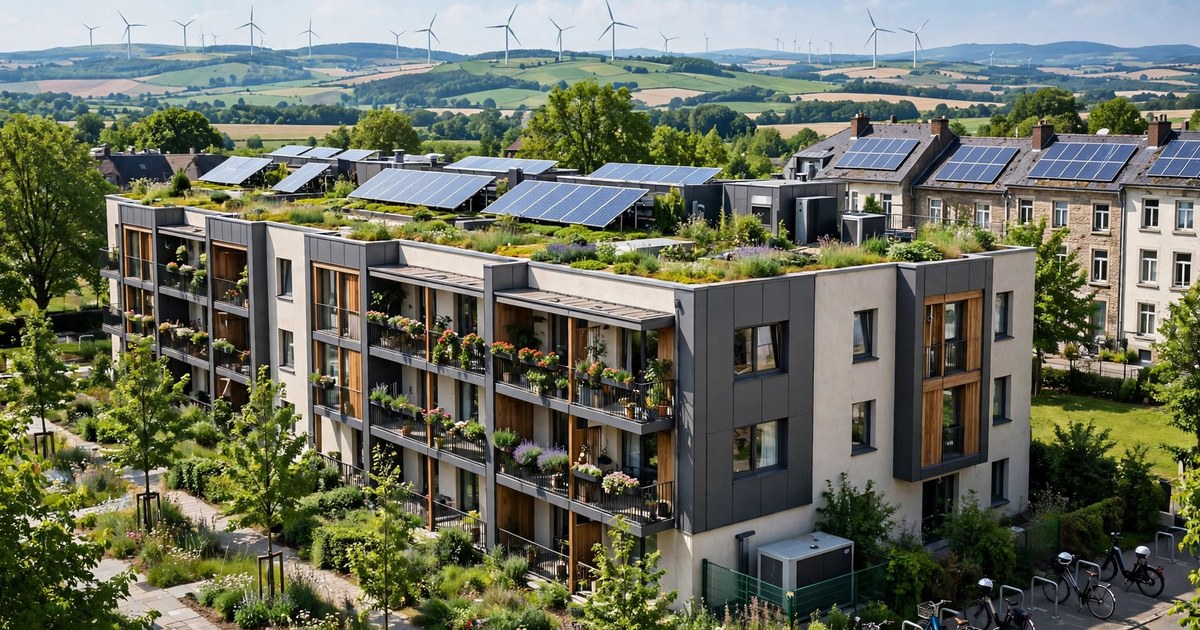
    The European Green Deal is often described as Europe’s climate plan, but that description is too small. It is a broad programme to reorganise how the European Union produces energy, builds homes, moves people and goods, grows food and makes industrial products — with the goal of making the EU climate neutral by 2050. For ordinary people, the Green Deal is not an abstract treaty debate. It shows up in energy bills, in the cars available to buy, in renovation rules for houses, in the price of flights and heating fuel, and in new jobs in some industries and pressure on jobs in others. This explainer separates what the Green Deal legally requires from what is still political debate, and explains where households are most likely to feel it.

    What the Green Deal actually is

    Launched by the European Commission in December 2019, the Green Deal is an umbrella strategy, not a single law. Its legal backbone is the European Climate Law, adopted in 2021, which wrote two targets into binding legislation: the EU must reach net-zero greenhouse gas emissions by 2050, and by 2030 it must cut net emissions by at least 55 percent compared with 1990 levels. Because these targets are in law, later governments cannot simply abandon them without changing legislation.

    Around that backbone sits a large package of individual laws, often grouped under the name "Fit for 55". These cover carbon pricing, renewable energy, energy efficiency, vehicle standards, land use and more. Some parts have been adjusted since 2024 as governments responded to energy prices, industrial competition and farmer protests — but the 2030 and 2050 targets themselves remain law.

    Carbon pricing: the ETS and what it means for bills

    The centrepiece of EU climate policy is the Emissions Trading System, or ETS. It sets a cap on emissions from power stations, heavy industry and aviation within Europe, and companies must hold allowances for each tonne they emit. The cap shrinks every year, and allowances are traded, which creates a carbon price. In plain terms: polluting becomes a cost of doing business, and cleaner production becomes cheaper by comparison.

    A second system, often called ETS2, is scheduled to extend carbon pricing to fuels used in buildings and road transport later this decade. This is the part households will notice most directly, because it can raise the cost of petrol, diesel and heating fuels. To cushion the effect, the EU created a Social Climate Fund, financed from ETS revenues, intended to support lower-income households with renovation, cleaner heating and transport costs. How much protection people actually receive will depend heavily on how each national government spends its share.

    Member states also receive large revenues from selling allowances. Those funds are meant to be reinvested in climate action, energy infrastructure and support for affected workers and regions, including through the Just Transition Fund for coal-dependent areas.

    Cars, vans and the end of new petrol and diesel sales

    EU law requires new cars sold from 2035 to have zero CO2 emissions, which in practice ends sales of new petrol and diesel cars, while leaving the existing fleet on the road. Car makers face steep interim targets before then, which is why manufacturers have expanded electric models and why charging networks are being mandated along major highways.

    For households, the practical questions are price, charging access and running costs. Electric cars remain more expensive to buy in many segments, though total running costs are often lower. Rural drivers, people without off-street parking, and used-car buyers are the groups most exposed to transition problems, and several governments run purchase or charging subsidies for that reason. The regulation includes a review clause, and debate about e-fuels and the pace of the change continues — but buyers should plan around the direction of travel, not around the debate.

    Homes: renovation, heating and energy labels

    Buildings account for a large share of Europe’s energy use, and most of the housing stock was built before modern insulation standards. The revised Energy Performance of Buildings Directive pushes member states to renovate the worst-performing buildings first, sets trajectories for reducing residential energy use, and phases out incentives for stand-alone fossil-fuel boilers. New buildings must meet zero-emission standards from around the end of the decade, with earlier dates for public buildings.

    For homeowners, this means energy performance certificates will matter more in sales and rentals, renovation support schemes are expanding, and gas boiler replacement decisions increasingly favour heat pumps or district heating. For tenants, the risk is that renovation costs are passed into rents; the opportunity is lower bills in a properly insulated home. Rules are implemented nationally, so deadlines and subsidies differ significantly between countries — always check your national or regional scheme rather than relying on EU-level headlines.

    Energy: renewables targets and your electricity supply

    The revised Renewable Energy Directive sets a binding target of at least 42.5 percent renewable energy in the EU’s overall energy mix by 2030, with an ambition toward 45 percent. Permitting for wind and solar projects is being sped up, and member states must designate areas where approvals are faster.

    Households feel this through rooftop solar rules, community energy schemes, and electricity tariffs that increasingly reward using power when renewable supply is abundant. It also affects energy security: the rapid build-out after 2022 was driven as much by the wish to reduce dependence on imported fossil fuels as by climate goals, and that security argument continues to protect renewables policy even when climate politics become contentious.

    Food, farming and nature

    The Green Deal’s farm and nature components have been its most contested. The Nature Restoration Law requires member states to restore degraded ecosystems, with targets for habitats, rivers and urban green space. Farm-related proposals on pesticides and nutrient losses met strong resistance, and some were withdrawn or softened after widespread farmer protests in 2024.

    For consumers, effects are gradual: more land managed for nature, changes in what is profitable to farm, and continued pressure on food prices from weather and input costs rather than from any single EU rule. For farmers, the deal means more environmental conditions attached to subsidies, alongside new income possibilities from carbon farming and ecosystem services — a transition that remains politically sensitive in almost every member state.

    Jobs and industry: cost or opportunity?

    Supporters argue the Green Deal is an industrial strategy: battery plants, heat-pump factories, grid equipment and renovation work create employment that cannot easily be offshored. Critics argue that carbon costs and regulation put European industry at a disadvantage against the United States and China, whose subsidies are larger and rules simpler. The EU’s response has included the Net-Zero Industry Act, faster permitting for clean-tech manufacturing, and a carbon border adjustment mechanism that charges imports of certain goods — such as steel, cement and fertilisers — according to their embedded emissions, so that EU producers are not undercut by cheaper, higher-carbon imports.

    For workers, the honest summary is mixed. Demand is growing for electricians, installers, engineers and construction workers. Employment tied to coal, conventional engines and energy-intensive production faces long-term decline, which is why transition funding exists. Where you live and what you do will decide whether the Green Deal feels like a cost, an opportunity, or mostly background noise.

    What is not true about the Green Deal

    It does not ban existing petrol cars, force anyone to surrender a home, or require people to stop eating meat — claims that circulate regularly on social media. It does not set one identical rulebook that applies overnight; almost every measure has phase-in periods, national implementation choices and exemptions for vulnerable groups. And it is not irreversible in every detail: individual laws are being revised, delayed or simplified. What is legally durable is the destination — the climate law’s 2030 and 2050 targets — unless and until legislators vote to change it.

    Frequently Asked Questions

    Is the Green Deal a single law?

    No. It is a strategy whose core targets are binding under the European Climate Law, implemented through many separate laws on energy, transport, buildings and industry.

    When do new petrol and diesel car sales end in the EU?

    From 2035, new cars sold must have zero CO2 emissions. Cars already on the road are not banned.

    Will carbon pricing raise my heating and fuel bills?

    It can, once pricing extends to building and transport fuels. The Social Climate Fund and national schemes are designed to offset costs for lower-income households.

    Does the Green Deal apply to the UK?

    No. The UK has its own net-zero legislation and carbon pricing system, though EU rules still affect UK exporters selling into the EU market.

    Can the targets be changed?

    Individual measures can be revised by EU legislators. The 2030 and 2050 targets are in law, so changing them would require new legislation.

    Sources / Note

    This article rests on official and primary sources of the kind that define the policy itself: the European Climate Law and Fit for 55 legislation as published on EUR-Lex, European Commission Green Deal and Social Climate Fund documentation, European Environment Agency emissions and energy data, and Eurostat statistics on buildings, energy and transport. Implementation dates, national subsidies and scheme details change frequently and differ by member state; readers should confirm current national rules through their government or energy regulator before making financial decisions.

  • How European Elections Work and Why They Matter Beyond Europe

    How European Elections Work and Why They Matter Beyond Europe

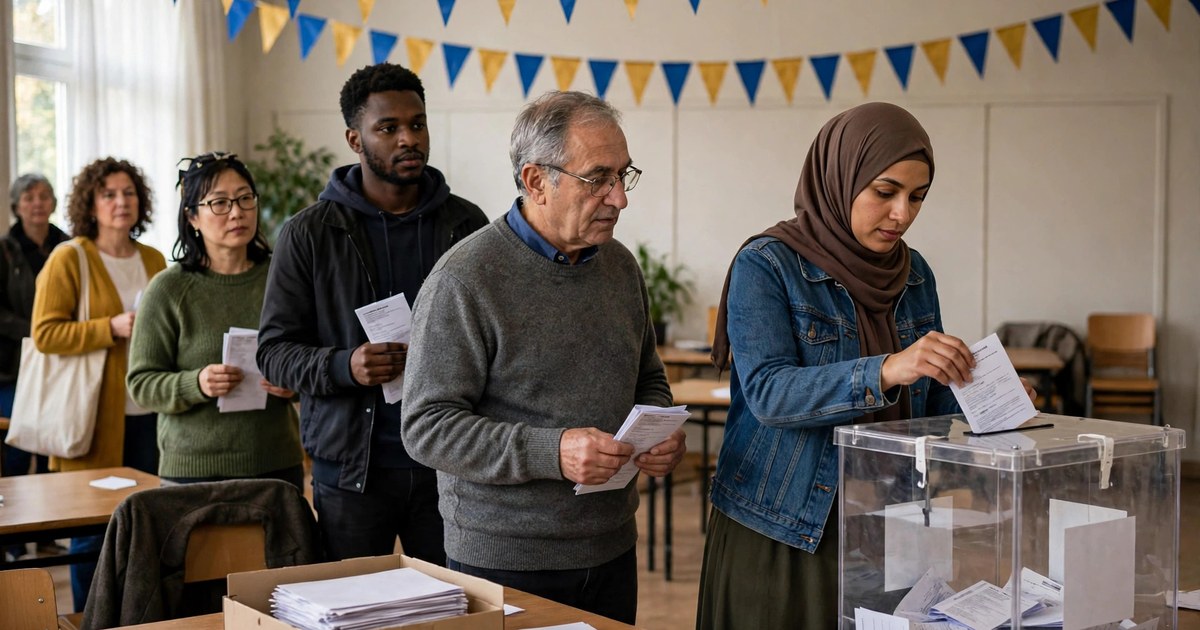
    Every five years, hundreds of millions of voters across the European Union choose the people who will represent them in the European Parliament. It is one of the largest democratic exercises in the world, second only to India’s general election in scale. Yet outside Europe, the vote is often treated as a local event with local consequences. That is a mistake. The Parliament elected in Brussels and Strasbourg helps decide rules on trade, technology, climate, migration and product standards that reach far beyond the EU’s borders. This explainer sets out how European elections actually work, why the system looks different from a national election, and why the results matter to governments, businesses and ordinary people who may never set foot in Europe.

    What exactly is being elected?

    The European Parliament is the EU’s directly elected law-making body. It currently has 720 members, known as MEPs — Members of the European Parliament. Together with the Council of the European Union, which represents national governments, the Parliament passes most EU legislation, approves the EU budget, and gives or withholds consent to international agreements, including trade deals.

    Voters do not elect the European Commission, the EU’s executive arm, directly. However, the Parliament must approve the Commission President and the team of Commissioners before they can take office, and it can dismiss the entire Commission through a vote of censure. That gives election results real weight in deciding who runs the EU’s day-to-day machinery.

    Who can vote, and where?

    Every citizen of an EU member state is also an EU citizen, and EU citizens aged 18 or over — 16 in a small number of countries — can vote in European elections. Unusually, citizens living in another EU country can choose to vote there, for candidates standing in their country of residence, instead of voting back home. Turnout is compulsory in a few member states, including Belgium and Luxembourg, and voluntary everywhere else.

    Each country organises its own vote under its own electoral law, within common EU principles. Voting usually takes place over several days, from Thursday to Sunday, because member states have different traditions about which day elections are held. Results cannot be announced until the last polling stations in the EU have closed, so that voters in one country are not influenced by outcomes in another.

    How seats are divided between countries

    Seats are allocated by a principle called degressive proportionality. Larger countries elect more MEPs than smaller ones, but smaller countries are deliberately over-represented compared with a strict population share. Germany, the most populous member state, elects 96 MEPs. Malta, the smallest, elects six. The idea is to balance two goals: reflecting population, while making sure even the smallest member state has enough representatives to cover the main political viewpoints of its voters.

    Within each country, seats are won through proportional representation. Parties present lists of candidates, voters choose a party — and in many countries can also express a preference for individual candidates — and seats are then shared out in proportion to votes. Most countries apply a threshold, often up to five percent, below which a party wins no seats. This is very different from first-past-the-post systems, and it means smaller and newer parties can enter the Parliament with a relatively modest share of the vote.

    Political groups: the Parliament’s real parties

    Once elected, MEPs do not sit by nationality. They join transnational political groups organised by ideology — centre-right, social democratic, liberal, green, conservative, left, and others. These groups, not national parties, are the working units of the Parliament. They negotiate compromises, divide up committee chairs and rapporteur roles, and decide how their members will vote on most files.

    To form a recognised group, MEPs must meet minimum requirements for numbers and for representation from several member states. Group membership matters practically as well as politically: recognised groups receive funding, staff and speaking time. It also matters for interpretation. A shift in seats between groups tells you far more about the direction of EU policy than the result in any single country.

    How the Commission President is chosen

    After the election, the European Council — the heads of state or government — proposes a candidate for President of the European Commission, taking the election results into account. Since 2014, the main political groups have promoted lead candidates, often called by the German term Spitzenkandidaten, during the campaign. The system is informal and has been applied inconsistently, but the logic is democratic: the group that performs best argues that its lead candidate has the strongest claim to lead the Commission.

    The Parliament then votes on the proposed President. If the candidate fails to win a majority of MEPs, the European Council must propose someone else. Later, the full team of Commissioners — one from each member state — faces individual hearings in parliamentary committees and a single vote of approval. Parliament has used these hearings to force the replacement of candidates it judged unsuitable, which shows that the post-election process is not a formality.

    Why turnout matters — and why it has been low

    For decades, turnout in European elections fell at every cycle, dropping below 43 percent in 2014 before recovering to just over 50 percent in 2019 and holding around that level in 2024. Analysts often describe these as "second-order" elections: voters treat them as less important than national votes, use them to protest against their own government, and campaigns are still run largely by national parties on national issues.

    That creates a paradox. The Parliament’s powers have grown with every EU treaty reform, so the institution voters take least seriously is more powerful than ever. Low turnout also skews representation, because older and more politically engaged citizens vote at higher rates than younger and less settled ones. Several member states have debated reforms — transnational lists, a single voting day, lowering the voting age — but change requires agreement across the whole Union and progress has been slow.

    Why the results matter beyond Europe

    First, trade. The Parliament must consent to EU trade agreements, and it has not hesitated to delay or reshape deals when concerns about environment, labour standards or agriculture arise. Exporters in Asia, Africa and the Americas who sell into the EU market are affected by standards the Parliament helps set, from chemical safety to deforestation rules for imported goods.

    Second, technology and data. Landmark EU laws on data protection, digital markets and artificial intelligence were co-decided by the Parliament. Because the EU market is large and wealthy, companies often apply EU rules globally rather than maintaining separate systems — a phenomenon researchers call the Brussels Effect. An election that shifts the balance between pro-regulation and deregulation-minded groups therefore changes the environment for technology firms worldwide.

    Third, climate and energy. The Parliament co-decides emissions targets, carbon pricing and vehicle standards. Those choices influence global supply chains, shipping, aviation and the price signals facing energy exporters.

    Fourth, migration and foreign policy. While foreign policy remains mainly in national hands, the Parliament controls budget lines, must approve many international agreements, and uses resolutions and hearings to shape debate. Its stance affects development funding, enlargement policy toward candidate countries, and support programmes that reach well beyond Europe.

    Common misunderstandings

    One frequent claim is that the Parliament cannot propose laws. That is broadly true — the formal right of legislative initiative belongs to the Commission — but incomplete. The Parliament can formally request that the Commission propose legislation, it can amend or reject almost any proposal, and in negotiations its amendments regularly survive into final law. Another misunderstanding is that MEPs vote as national blocs. Voting records show group discipline is usually stronger than national loyalty, except on issues with a direct national interest, such as agriculture or fisheries allocations.

    Finally, European elections do not choose a single "government of Europe" in the way a national election chooses a government. Power in the EU is deliberately dispersed among the Parliament, the Council, the Commission and member states. Elections shift the balance within that system rather than handing total control to a winner — which is precisely why reading the results requires looking at group totals, coalition possibilities and the Council’s composition together.

    Frequently Asked Questions

    How often are European elections held?

    Every five years, across all EU member states, usually in late spring.

    How many members does the European Parliament have?

    720 MEPs, divided among member states by degressive proportionality, from 96 for Germany down to six for the smallest states.

    Can EU citizens living abroad in another EU country vote?

    Yes. They can choose to vote in their country of residence or in their country of origin, but not both.

    Do voters elect the European Commission President directly?

    No. The European Council proposes a candidate taking election results into account, and the Parliament must elect that candidate by majority vote.

    Why do results come out on the same night for all countries?

    Counting and publication are held back until the last polling stations in the EU close, so early results cannot influence voters still casting ballots elsewhere.

    Sources / Note

    This explainer is based on the types of sources that govern and document the process directly: the European Parliament’s official electoral procedure and results publications, the EU treaties and the EU electoral act as published on EUR-Lex, Eurostat population data used for seat allocation, and European Parliamentary Research Service briefings. Figures such as the total number of seats reflect the composition set for the current parliamentary term and should be checked against the Parliament’s official site before republication, as seat numbers are reviewed before each election.

  • France, Germany and Poland: The Three Powers Shaping Europe’s Future

    France, Germany and Poland: The Three Powers Shaping Europe’s Future

    When European leaders gather to decide questions of war and peace, energy, money, or the future borders of the European Union, three capitals are watched more closely than most: Paris, Berlin, and Warsaw. France, Germany, and Poland do not decide Europe’s future alone. The other 24 EU member states, the institutions in Brussels, and partners such as Italy, Spain, and the Nordic and Baltic countries all matter. Yet the combined weight of these three — in population, economic output, military capability, and political influence — means that when they agree, the EU can usually move, and when they disagree, it often slows down.

    Why These Three Matter: People, Money, and Military Weight

    Together, France, Germany, and Poland account for roughly 190 million people, well over 40 percent of the EU’s population of about 450 million. Germany is the EU’s most populous member state, with more than 84 million residents, followed by France with around 68 million and Poland with around 37 million.

    Their economic weight is just as significant. Germany has the largest economy in Europe, built on manufacturing, engineering, and exports. France has the EU’s second-largest economy, with strengths in aerospace, energy, agriculture, finance, and defence. Poland, while smaller, has become the largest economy in central and eastern Europe and one of the EU’s fastest-growing economies over three decades.

    Military weight completes the picture. France is the EU’s only nuclear power since the United Kingdom left the Union, maintains armed forces designed for operations beyond Europe, and holds a permanent seat on the United Nations Security Council. Germany, after decades of restraint, has committed to a major rebuilding of the Bundeswehr and now has one of Europe’s largest defence budgets in absolute terms. Poland has expanded its military rapidly, spending a higher share of national income on defence than any other NATO ally in recent years, and building up its land forces along NATO’s eastern flank.

    The Franco-German "Engine" of the EU

    For most of the history of European integration, the central relationship was not a triangle but a pair: France and Germany. Reconciliation between the two former wartime enemies was the founding purpose of the European Coal and Steel Community in 1951 and the European Economic Community in 1957.

    The partnership was formalised in the Élysée Treaty of 1963 and renewed by the Treaty of Aachen in 2019. A pattern developed that observers called the Franco-German "engine" of Europe. Before major summits, French and German leaders would meet, reconcile their different instincts — France favouring political ambition and European strategic autonomy, Germany favouring fiscal discipline and strong rules — and arrive in Brussels with a joint proposal. Others could amend it, but it often set the agenda.

    The engine produced major steps, including the single market, the creation of the euro, and, in 2020, agreement on joint EU borrowing for the post-pandemic recovery fund, a step Germany had long resisted. Still, for sixty years the assumption in Brussels was simple: without Franco-German agreement, major progress was unlikely.

    Poland’s Rising Role, Especially Since 2022

    Poland was never absent from European politics. As the largest country to join the EU in 2004, it brought a strong Atlanticist outlook, close ties to the United States, and a historical experience of Russian and Soviet domination that shaped its view of security. Warsaw argued for years that Europe underestimated the risk from Russia and depended too heavily on Russian energy.

    Russia’s full-scale invasion of Ukraine in February 2022 changed Poland’s standing dramatically. Poland became the main logistical gateway for Western aid to Ukraine, hosted more Ukrainian refugees than any other EU country in the first phase of the war, and emerged as one of Kyiv’s most vocal advocates in both the EU and NATO. Arguments Warsaw had made for a decade about deterrence and energy security suddenly looked prescient.

    At the same time, domestic politics affected Poland’s influence. Disputes with Brussels over the rule of law, which intensified after 2015, limited Warsaw’s ability to build coalitions and led to EU funds being withheld. The change of government in late 2023, which brought a pro-EU coalition to power under Donald Tusk, a former president of the European Council, reopened channels with Brussels and Berlin and made three-way cooperation practical again. Poland’s influence today rests on its security role on the eastern flank and a renewed effort to be present where EU compromises are drafted.

    The Weimar Triangle: A Format With a Purpose

    The three countries have a formal framework for meeting: the Weimar Triangle. Created in 1991, shortly after the Cold War, by the foreign ministers of France, Germany, and the newly democratic Poland, it takes its name from the German city of Weimar, where the first meeting took place. Its original purpose was to anchor Poland in Western structures and support its path toward NATO and EU membership, achieved in 1999 and 2004 respectively.

    For long periods the format was more symbolic than decisive. Since 2022, and especially since 2024, it has been revived as a working format, with meetings of heads of government and foreign and defence ministers used to coordinate positions on Ukraine, European defence, and EU policy before wider summits. It brings western and eastern perspectives together in a group small enough to negotiate honestly, yet large enough to carry much of the Union if it reaches a common line.

    Its limits are clear. It is not an institution, takes no binding decisions, and cannot replace the European Council, where all 27 member states sit. Its usefulness depends on whether the three governments want to use it — and whether other member states see it as a bridge for building wider agreement rather than a closed club.

    Where the Three Agree

    The clearest agreement is on Ukraine. All three governments support Ukraine’s sovereignty, have supplied military, financial, and humanitarian assistance, back EU sanctions on Russia, and support strengthening NATO’s eastern defences. There are differences of emphasis and speed, but not of direction.

    They also broadly agree that the EU must take more responsibility for its own security. How far and how fast to go is still debated, but the principle — that Europe cannot assume permanent, unlimited American protection and must build stronger capabilities of its own — is now shared in Paris, Berlin, and Warsaw in a way it was not a decade ago.

    On enlargement, all three accept in principle that the EU’s future includes Ukraine, Moldova, and the Western Balkan states, provided candidates meet the Union’s criteria on democracy, the rule of law, and economic reform. They also agree that enlargement requires the EU to reform how it decides and funds its policies, although they do not yet agree on what those reforms should be. All three are also committed to the single market and to EU competitiveness.

    Where the Three Disagree

    Energy is a long-standing fault line. France relies heavily on nuclear power and defends its place in Europe’s low-carbon future. Germany completed its phase-out of nuclear power in 2023 and built its strategy around renewables, efficiency, and imported gas in transition. Poland, historically dependent on coal, is moving toward a mix including its first nuclear power plants alongside renewables, while warning that climate policy must not outrun what its industry and households can afford. These models regularly collide in Brussels over EU climate and energy rules.

    Fiscal policy is another divide. Germany has traditionally been the EU’s strongest advocate of strict budget rules and limited common debt. France has usually argued for more flexibility, more public investment, and greater willingness to borrow jointly for European priorities. Poland tends to sit between the two: cautious about arrangements that might reduce EU funds for less wealthy regions, but supportive of common spending on defence and infrastructure that benefits the east.

    Defence procurement may be the most practical disagreement. France argues that European money should buy European equipment, strengthening the continent’s own defence industry. Germany balances that instinct against speed and interoperability, and has bought American systems when it judged European alternatives unavailable or too slow. Poland, rearming at speed since 2022, has bought heavily from the United States and South Korea as well as European suppliers, prioritising rapid delivery over industrial policy. Underlying these disputes are different strategic cultures: France’s instinct for autonomous action, Germany’s preference for multilateral process, and Poland’s reliance on the American security guarantee.

    What This Means for the Rest of Europe

    For other member states, a working triangle is both an opportunity and a concern. The opportunity is momentum. When countries representing more than 40 percent of the EU’s population align behind a proposal on Ukraine aid, defence funding, or enlargement, it starts with a strong chance of adoption, and smaller states can focus on shaping its details rather than building a majority from scratch.

    The concern is exclusion. Governments in southern, northern, and smaller member states have periodically worried that a Paris-Berlin-Warsaw axis could set the terms of debate before others are heard — on fiscal rules affecting indebted southern economies, on energy rules, or on defence priorities weighted toward the eastern flank rather than the Mediterranean. The format’s health therefore depends on how the three use it. Used as a first step toward a wider compromise, it strengthens the Union. Used as a substitute for one, it breeds resentment and blocking minorities.

    For neighbours and partners, the triangle is also a signal. A united position makes EU policy more predictable for Ukraine, candidate countries, and the United States. Visible friction invites outside powers to negotiate with capitals separately. The relationship is therefore a reliable early indicator of whether Europe will act together, or drift apart.

    Frequently Asked Questions

    What is the Weimar Triangle?

    A forum for political cooperation between France, Germany, and Poland, founded in 1991 in Weimar, Germany. It holds meetings of leaders and ministers to coordinate on European and security policy, but takes no binding decisions.

    Why is Poland more influential in the EU than it used to be?

    Mainly because of security. Since 2022, Poland has become the key logistics hub for aid to Ukraine, a leading voice on eastern policy, and one of NATO’s highest defence spenders relative to its economy. A more cooperative relationship with Brussels since late 2023 has reinforced that role.

    Do France, Germany, and Poland always agree on EU policy?

    No. They agree on supporting Ukraine and on stronger European security, but regularly disagree on energy, EU budget rules and joint borrowing, and whether European defence money should buy only European-made equipment.

    Can these three countries decide EU policy on their own?

    No. EU decisions require agreement among all member states in the Council, often together with the European Parliament. The three carry great weight because of their size, but still need majorities with the other 24 countries.

    Sources and Note

    This article is an original explainer written for TheEuropeTimes.site and does not reproduce news agency copy or any single outlet’s reporting. Its factual framework rests on official government sources of France, Germany, and Poland, including foreign ministry publications on the Weimar Triangle and bilateral treaties; European Council and Council of the European Union documentation on summits, enlargement, and fiscal rules; Eurostat population and economic data; NATO defence expenditure figures; and analysis from established European policy research institutes specialising in EU affairs and security. Figures are given in rounded terms because such data are revised regularly; readers seeking exact current values should consult the latest Eurostat and NATO releases.

  • UK After Brexit: What Has Actually Changed for Trade, Travel and Work

    UK After Brexit: What Has Actually Changed for Trade, Travel and Work

    More than eight years after the referendum and several years after the United Kingdom formally left the European Union, Brexit is no longer a single event. It is a set of practical rules that now shape how goods cross borders, how people travel, and who can live and work in the UK and in EU countries.

    This explainer sets out what has actually changed — and what has not — using official data and guidance rather than campaign claims from either side.

    A Brief Timeline: From Referendum to New Relationship

    On 23 June 2016, UK voters chose to leave the European Union by 52 percent to 48 percent. The result began a long negotiation over the terms of departure and the future relationship.

    After several extensions, the UK left the EU on 31 January 2020 under a Withdrawal Agreement covering citizens’ rights, the financial settlement, and Northern Ireland. A transition period then kept the UK in the single market and customs union until 31 December 2020, while a new deal was negotiated.

    That deal, the EU-UK Trade and Cooperation Agreement, was agreed on 24 December 2020 and applied from 1 January 2021. From that date, the UK was fully outside the single market and customs union, and the new rules on trade, travel, and movement took effect. Most practical changes in this article date from the end of transition, not from the 2020 exit day itself.

    Trade: Tariff-Free, But Not Friction-Free

    The Trade and Cooperation Agreement avoided tariffs and quotas. Goods traded between the UK and the EU remain tariff-free and quota-free in principle — welcomed by traders who had warned tariffs would raise costs for food, cars, and manufactured goods. Tariff-free, however, does not mean the same as before.

    Customs checks and paperwork

    While the UK was in the customs union, goods moved to and from the EU without customs declarations. That has ended. Traders must now complete customs declarations, provide safety and security information, and be ready for border checks.

    For animal and plant products such as meat, dairy, and fresh produce, sanitary and phytosanitary checks, export health certificates, and pre-notification are now routine. The UK phased in import controls on EU goods in stages under its Border Target Operating Model. Business groups report the administration is manageable for large firms, but more burdensome for small businesses that previously traded only within the EU; some reduced or stopped EU sales, and others now pay customs agents.

    Rules of origin

    Tariff-free access applies only to goods that qualify as originating in the UK or the EU. A product assembled in the UK from parts imported from third countries may not qualify if not enough of its value was created in the UK or the EU.

    Traders in sectors such as cars and food processing must keep evidence of where components came from; failure to prove origin can mean paying the standard tariff.

    Services trade

    Services — finance, law, consulting, creative industries, and technology — account for a large share of UK exports, but they were covered far less comprehensively than goods.

    UK financial firms lost automatic "passporting" rights, which had allowed a London-authorised firm to serve clients across the EU. Some business moved to Amsterdam, Dublin, Paris, and Frankfurt, although London remains Europe’s largest financial centre. The EU has granted only limited, often temporary "equivalence" decisions. For other professions, qualifications are no longer automatically recognised in all cases, and rules now depend on the trade agreement, EU rules, and member state laws.

    What the data suggest so far

    Assessing the overall effect is contested, and complicated by the Covid-19 pandemic and energy price rises after Russia’s invasion of Ukraine. The Office for Budget Responsibility maintains that leaving will reduce long-run UK productivity by around 4 percent compared with remaining, mainly through lower trade intensity. Supporters of leaving argue this understates the benefits of regulatory independence and new non-EU trade deals, including with Australia, New Zealand, and the trans-Pacific CPTPP bloc. Critics point to Office for National Statistics data showing weaker goods trade with the EU than with the rest of the world since transition ended.

    Travel: Short Trips Still Easy, Long Stays Different

    For most holidaymakers, travel still feels familiar: no visa is needed for a short holiday, and flights and ferries operate as before. The underlying rules, however, have changed.

    The 90/180 rule

    UK citizens are now third-country nationals for the EU’s Schengen Area, which covers most EU countries plus Iceland, Norway, Switzerland, and Liechtenstein. They can visit for tourism or business meetings for up to 90 days in any 180-day period without a visa, across the Schengen Area as a whole — not 90 days per country.

    Time in different Schengen countries adds up, so travellers with second homes or long trips must count days carefully; overstaying can lead to fines or entry bans. Ireland is separate: under the Common Travel Area, UK and Irish citizens can travel, live, and work in each other’s countries largely as before. EU citizens visiting the UK can generally stay up to six months without a visa, but cannot work as visitors.

    Passports and border checks

    UK passports must meet third-country entry rules for Schengen travel: issued less than 10 years before the date of entry, and valid for at least three months after the planned departure from the Schengen Area. The 10-year rule caught out some travellers whose passports had extra months added from early renewal under old UK practice.

    At borders, UK travellers use non-EU lanes where they exist, and passports are stamped — set to change as the EU’s biometric Entry/Exit System is introduced. Flight rights and delay compensation continue in similar form under UK law, enforced by UK bodies.

    Healthcare cover: EHIC to GHIC

    The European Health Insurance Card (EHIC) entitled UK residents to state healthcare in EU countries on the same terms as local residents. Existing EHICs remained valid until expiry after Brexit.

    Its replacement is the UK Global Health Insurance Card (GHIC), covering necessary state healthcare in EU countries, and some others under reciprocal arrangements, but not everywhere the EHIC did. Neither card replaces travel insurance for private treatment or repatriation. Mobile roaming has also changed: the EU ban on surcharges no longer applies to UK customers, and some operators have reintroduced daily charges.

    Work and Study: Free Movement Has Ended

    Perhaps the most fundamental change is the end of free movement — the right of EU citizens to live and work in the UK, and of UK citizens to live and work in EU countries, without needing permission.

    The points-based immigration system

    Since 1 January 2021, EU citizens arriving to work in the UK are treated under the same system as people from the rest of the world, except Irish citizens. The points-based system generally requires a job offer from a licensed sponsor at a required skill and salary level, with separate routes for students, graduates, health and care workers, and seasonal workers. EU citizens already living in the UK before transition ended could protect their status under the EU Settlement Scheme; several million applied, and similar schemes protected UK citizens in EU countries.

    Employers in hospitality, agriculture, food processing, logistics, and social care reported recruitment difficulties after free movement ended, though the pandemic also played a part. Overall net migration rose to record levels after Brexit, driven mainly by non-EU work and study migration. For UK citizens wanting to work in the EU, there is no single EU-wide visa: each member state sets its own permit rules, and employers often must show a post cannot easily be filled locally.

    Study: Erasmus replaced by Turing

    The UK no longer participates in the EU’s Erasmus+ programme, which funded study and training exchanges across Europe. UK students can still study at European universities, but they pay the fees and follow the visa rules applying to non-EU students in each country. EU students coming to the UK are generally treated as international students for fees and visas.

    In its place, the UK created the Turing Scheme, funding UK students and trainees to study or work abroad worldwide. Supporters say this broadens opportunities beyond Europe. Critics, including many universities, note Turing does not fund incoming students as Erasmus did, weakening reciprocal exchange. Both programmes continue, but they are no longer a shared system.

    Northern Ireland: A Special Arrangement

    Northern Ireland has a distinct position designed to avoid a hard border on the island of Ireland, a central concern in negotiations because of the Good Friday (Belfast) Agreement.

    Under the original Northern Ireland Protocol and the revised Windsor Framework agreed in 2023, Northern Ireland remains aligned with EU rules for goods, so goods can move across the land border with Ireland without checks. At the same time, Northern Ireland remains part of the UK’s customs territory, and goods arriving from Great Britain face processes intended to distinguish goods staying in Northern Ireland from those moving on into the EU.

    The Windsor Framework introduced simplified "green lane" arrangements for goods staying in Northern Ireland, while goods at risk of entering the EU use fuller procedures. The arrangements remain politically debated, but the aim — no border infrastructure on the island, with checks largely at ports — has been maintained.

    What Has Stayed the Same

    Several things have not changed. The UK and EU remain major trading partners, and most goods still cross without tariffs. Short tourist trips remain visa-free, and the Common Travel Area with Ireland continues. Residence rights acquired before transition ended were protected. The UK also remains a member of NATO, the Council of Europe, and the European Convention on Human Rights — none of which are EU institutions.

    Frequently Asked Questions

    Can UK citizens still move to an EU country to live and work?

    Yes, but not automatically. You will normally need a residence and work permit from the specific country, often based on a job offer, self-employment, study, or family ties. Each EU country sets its own rules and processing times.

    Do I need a visa for a holiday in Spain, France, or Italy?

    No, not for a short trip. UK passport holders can spend up to 90 days in any 180-day period in the Schengen Area without a visa. Count days across all Schengen countries combined, and check your passport meets the 10-year issue and three-month validity rules.

    Can EU citizens still work in the UK?

    Those with status under the EU Settlement Scheme, and Irish citizens, can work freely. Other EU citizens arriving to work generally need a visa under the points-based system, usually with a sponsored job offer meeting skill and salary requirements.

    Is my EHIC still valid?

    Only until its expiry date. Most UK residents should now apply for a free GHIC through official government channels instead. Neither card replaces travel insurance.

    Sources and Note

    This explainer rests on official sources: UK government GOV.UK guidance on visiting Europe, the GHIC, and immigration; the EU-UK Trade and Cooperation Agreement and European Commission Brexit documentation; Office for National Statistics trade and migration data; and Office for Budget Responsibility assessments. National visa rules can change, so readers planning to move or work should check current official guidance for their destination. Policies reflect the position as generally reported up to late 2026.

  • Why Europe Is Raising Defence Spending: The NATO Debate Explained

    Why Europe Is Raising Defence Spending: The NATO Debate Explained

    For three decades after the Cold War, most European governments reduced the share of national income spent on defence. Armies became smaller, equipment stocks were cut, and many countries assumed a large-scale war on the continent had become unlikely. That assumption has now been reversed. Defence budgets are rising at their fastest pace in a generation, new targets are being debated inside NATO, and the European Union is building tools to fund and coordinate military production.

    This article explains why spending is increasing, what the NATO targets mean, how countries compare, what the EU is doing, and what the debate means for ordinary citizens.

    The Turning Point: Russia’s Full-Scale Invasion of Ukraine

    The clearest turning point was Russia’s full-scale invasion of Ukraine in February 2022. Russia had annexed Crimea and backed armed groups in eastern Ukraine from 2014, but the 2022 invasion was a large conventional war involving missile strikes, armoured offensives, and attacks on cities and infrastructure across an entire country.

    It changed European security calculations in several ways. It showed that a major war of territorial conquest was possible in Europe again, not only a limited or hybrid conflict. It exposed how quickly modern warfare consumes ammunition, air-defence missiles, drones, and spare parts — far faster than many peacetime stockpiles were designed to support. And equipment donated to Ukraine left gaps in national inventories that governments then had to pay to refill.

    Germany’s announcement in 2022 of a special fund of 100 billion euros for its armed forces, described by its chancellor at the time as a turning point, became the best-known symbol of the shift. But the change was broader. Poland sharply increased its budget and placed large orders for tanks, artillery, and aircraft. The Baltic states and Nordic countries accelerated existing plans. Finland joined NATO in 2023 and Sweden in 2024, ending long periods of military non-alignment.

    Spending had already begun to rise after 2014, but the post-2022 increase was larger, faster, and spread across more countries.

    What Is NATO’s 2 Percent Guideline?

    NATO does not set national budgets. It agrees political commitments among member governments, which are then reflected — or not — in national budgets.

    In 2014, NATO leaders agreed at the Wales Summit that members spending below 2 percent of gross domestic product (GDP) on defence would aim to reach 2 percent within a decade, and to spend 20 percent of their defence budgets on major new equipment. GDP is the total value of goods and services produced in a country in a year, so a share of GDP allows comparison between economies of very different sizes.

    For years, only a handful of European members met the figure. According to NATO’s estimates, that changed sharply after 2022, and by 2024 a clear majority of allies — 23 of 32 members, including most European members — were estimated to be at or above 2 percent.

    NATO’s common definition matters when reading these figures. Its measure can differ from a country’s own headline budget number, because it uses agreed categories for personnel, equipment, infrastructure, and pensions. Two figures for the same country in the same year can therefore both be correct, depending on the definition used.

    The Debate About Higher Targets

    Meeting 2 percent is no longer the end of the discussion. Members have debated whether the old guideline is sufficient for the capabilities the alliance now says it needs: more air and missile defence, larger ammunition stocks, long-range weapons, drones and counter-drone systems, cyber and space capabilities, and the logistics to move forces across Europe quickly.

    At the NATO summit in The Hague in June 2025, allies agreed a new, higher commitment: 5 percent of GDP by 2035, split into 3.5 percent for core defence requirements and 1.5 percent for defence- and security-related investment such as infrastructure, resilience, and industrial capacity. Supporters say this separates direct military spending from wider spending that supports defence, such as transport infrastructure able to carry heavy equipment.

    Governments closest to Russia generally argue that higher spending responds to a long-term threat, and that capability targets — what forces can actually do — should drive budgets. Others, including Spain during the summit discussions, raised concerns about reaching such a level quickly without affecting other public commitments, and sought flexibility. The United States, under successive administrations, has also pressed European allies to carry a larger share of the cost of Europe’s conventional defence, making burden-sharing a recurring transatlantic theme.

    Analysts note that a percentage of GDP does not by itself guarantee useful output: one country may spend largely on personnel and pensions, while another buys modern equipment more efficiently, especially jointly. NATO therefore also tracks equipment spending and capability targets.

    Which European Countries Spend the Most and the Least?

    Patterns differ considerably, reflecting geography, history, and threat perception.

    In percentage-of-GDP terms, Poland has in recent years recorded the highest defence spending in NATO, at well above 4 percent of GDP in NATO’s 2024 and 2025 estimates, driven by a large modernisation programme. The Baltic states — Estonia, Latvia, and Lithuania — have also consistently been among the highest spenders as a share of GDP, and plan to move higher still. Greece has historically spent a high share, shaped by its long-standing tensions with Türkiye, although much of it has traditionally gone to personnel. The United Kingdom, France, and Germany are Europe’s largest spenders in absolute cash terms because their economies are large, even when their percentages sit closer to the middle of the range.

    At the lower end, Spain, Belgium, Luxembourg, Slovenia, and Italy spent below or only near 2 percent for much of the past decade, according to NATO estimates, though several have since announced phased increases. Ireland, an EU member but not a NATO member, spends a particularly small share of GDP on defence and maintains military neutrality, so its debate is separate.

    The broad picture is consistent: eastern and northern states closest to Russia tend to spend the highest shares, while several western and southern states are increasing from a lower base.

    What the European Union Is Doing

    NATO remains the main organisation for collective defence planning for its members, but the European Union has expanded its role on the industrial and financial side. The EU cannot command national armies, yet it can fund research, support joint buying, and use its budget and regulatory powers to strengthen the defence industry.

    Key steps include the European Defence Fund, which co-finances collaborative research and development involving companies from several member states. After 2022, the EU also adopted measures to encourage joint procurement of ammunition and equipment, and to expand ammunition production capacity in Europe. In 2025, the European Commission presented further readiness plans, including a large loan instrument known as SAFE, intended to help member states borrow jointly on favourable terms for defence investment, and proposals for more flexibility in EU fiscal rules for defence spending.

    The European Defence Agency also helps coordinate: it collects defence data, identifies duplicated or missing capabilities, and supports cooperative projects. Its annual data is a main source for comparing European spending outside NATO’s figures.

    The two efforts overlap but are not identical. Twenty-three countries belong to both organisations, so the same budget often has to meet NATO capability targets while using EU tools to buy equipment more cheaply or produce it in Europe. Debate continues over whether EU programmes should favour European suppliers, or buy more quickly from outside suppliers, including the United States and South Korea, when equipment is needed urgently.

    Arguments For and Against Higher Spending

    Supporters make several arguments. The first is deterrence: visible capability and readiness, they argue, reduce the risk of attack, and prevention costs less than war. The second is credibility within NATO: meeting agreed targets is presented as keeping a political commitment and maintaining US engagement in European security. The third is industrial: sustained orders can rebuild production lines for ammunition, vehicles, and air defence that were allowed to shrink, creating skilled jobs. The fourth is continued support for Ukraine, which requires European equipment and ammunition.

    Critics raise different concerns. One is opportunity cost: money directed to defence is not spent on health care, education, housing, pensions, or climate investment, and several governments already carry high public debt. Another is efficiency: rapid increases can lead to rushed purchases, rising prices from a limited number of suppliers, and equipment expensive to maintain. A third is public consent — voters may support defence in principle but resist tax rises, borrowing, or cuts elsewhere. Some analysts also argue that Europe’s core problem is fragmentation, with many small national fleets of different tanks, ships, and aircraft, and that better coordination could deliver more capability without every country simply spending more in isolation.

    What It Means for Ordinary Citizens

    For most citizens, the debate arrives through national budgets. Governments have three broad ways to pay: raise revenue, borrow more, or spend less elsewhere. Countries are choosing different mixes. Some have created special funds or used EU loans; others have adjusted fiscal rules or announced phased increases over a decade, which softens the immediate effect but commits future budgets.

    Defence investment can also bring jobs and contracts to regions with factories, shipyards, or research centres, and infrastructure spending linked to defence can include upgrades to ports, railways, and bridges used by both civilian and military traffic.

    In some countries, the discussion extends to military service. Lithuania, Latvia, Sweden, and Germany are among the states that have reintroduced, expanded, or debated forms of conscription or voluntary national service in recent years, while Croatia has announced plans to restore compulsory service. Others, including the United Kingdom and France, have debated expanded voluntary or civic service models rather than full conscription. These policies affect young people directly and are often the most personally felt part of the shift. They remain national decisions; there is no EU-wide or NATO-wide conscription policy.

    FAQ

    Is NATO forcing European countries to spend 5 percent of GDP?

    No. NATO commitments are political agreements between governments, not laws enforced by NATO. Each parliament still approves its own budget. The 2025 commitment sets a shared target of 5 percent by 2035, divided between core defence and wider security-related investment, but pace and method remain national decisions.

    Why is spending measured as a percentage of GDP?

    Because it allows comparison between countries of very different sizes and shows the share of national resources devoted to defence. It is imperfect — it does not show how efficiently money is used — which is why NATO and the European Defence Agency also publish data on equipment spending and capabilities.

    Do all European countries belong to NATO?

    No. Most EU member states are also NATO members, but Austria, Ireland, Malta, and Cyprus are EU members outside NATO, while several European NATO members, including the United Kingdom, Norway, and Türkiye, are outside the EU. Switzerland is in neither.

    Will higher defence spending mean cuts to public services?

    Not automatically, but the trade-off is real over time. Governments can borrow, raise revenue, use special funds, or reprioritise spending, and most are using a mixture, with increases phased over years.

    Sources and Note

    This explainer is an original summary written for TheEuropeTimes.site and does not reproduce text from any news outlet. The facts rest on official and research sources of the following types: NATO’s official defence expenditure reports and summit declarations, including the 2014 Wales Summit pledge and the 2025 Hague Summit commitment; European Defence Agency annual defence data; European Commission and Council of the EU documents on the European Defence Fund, joint procurement instruments, and the SAFE loan facility; national government budget documents and defence ministry announcements; and independent research and military expenditure data from the Stockholm International Peace Research Institute (SIPRI). Figures are given in general terms because estimates are revised regularly; readers should consult the latest NATO and European Defence Agency releases for exact figures by country and year.

  • ETIAS Explained: Europe’s New Travel Authorisation and When You Will Need It

    ETIAS Explained: Europe’s New Travel Authorisation and When You Will Need It

    For many years, travellers from countries such as the United States, the United Kingdom, Canada, Australia and Japan have been able to fly to Paris, Rome or Madrid with little more than a valid passport — no visa appointment, no interview, just a stamp on arrival and up to 90 days to travel.

    That arrangement is about to gain one extra step. The European Union is introducing ETIAS, the European Travel Information and Authorisation System, a pre-travel screening system for people who do not need a visa to enter the Schengen area. It is not a visa, and for most travellers it should be a short online form and a modest fee. But because the launch has been postponed more than once, confusion is widespread — and unofficial websites are already trying to profit from it.

    What Is ETIAS?

    ETIAS stands for the European Travel Information and Authorisation System. It is an automated system created under EU law to screen visa-exempt travellers before they travel to the Schengen area, to identify people who may pose a security, irregular migration or public health risk, while keeping travel straightforward for most visitors.

    The concept is similar to systems elsewhere, such as the ESTA used by the United States, Canada’s eTA and the United Kingdom’s ETA. Travellers provide basic information in advance, which is checked automatically against government databases. Approval is normally quick, and the authorisation is linked electronically to the passport rather than issued as a sticker.

    ETIAS is being developed with the involvement of eu-LISA, the EU agency for large-scale border and security IT systems, alongside the European Commission, Frontex — the European Border and Coast Guard Agency — and national authorities. Once operating, carriers are expected to check that passengers hold a valid authorisation before boarding.

    Who Will Need ETIAS?

    ETIAS will apply to nationals of visa-exempt countries and territories travelling to the Schengen area for short stays. The Schengen area covers most EU member states plus Iceland, Liechtenstein, Norway and Switzerland. In practice, the requirement applies to travel to the 30 European countries taking part in the system, including France, Germany, Italy, Spain, Greece, the Netherlands and Portugal.

    Examples of travellers who will need it include:

    • Citizens of the United States, Canada, Australia, New Zealand, Japan, South Korea, Singapore and many Latin American countries visiting Europe for tourism.
    • British citizens travelling to Schengen countries for holidays, business trips or family visits since the United Kingdom left the EU.
    • Any visa-exempt visitor planning a short stay of up to 90 days within any 180-day period for tourism, business, transit or medical purposes.

    The 90-in-180-days rule does not change. ETIAS does not extend your stay, or give you the right to live, work or study long-term in Europe. It authorises you to travel to the border, where guards still make the final entry decision.

    Who Does Not Need ETIAS?

    Just as important is who is outside the system. You will not need ETIAS if you are:

    • A citizen of an EU country or of a Schengen-associated country, travelling on that passport.
    • A national of a country whose citizens require a Schengen visa — you will continue to apply for a visa instead, and you cannot use ETIAS as an alternative.
    • A holder of a valid residence permit or residence card issued by a participating European country, or of a long-stay visa from one of those countries.
    • Travelling only to a European country that is not part of the ETIAS system. Ireland, for example, is an EU member state but is not in Schengen and does not take part in ETIAS, so a trip solely to Ireland does not require it.

    Detailed exemptions exist for specific groups, including certain family members of EU citizens, refugees, diplomats and crew. Anyone in an unusual category should check the official guidance for their situation.

    How ETIAS Differs From a Visa

    The distinction between ETIAS and a visa causes the most confusion, so it is worth stating clearly.

    A Schengen visa is a full process: detailed forms, supporting documents such as bank statements and proof of accommodation, a consulate or visa centre appointment, fingerprints, a higher fee, and a wait of days or weeks. A visa is a sticker in your passport.

    ETIAS is a travel authorisation for people who are already visa-exempt. There is no consulate visit, interview or document bundle in the standard process. You complete a short online form, pay a small fee, and in most cases receive a decision by email within minutes. It is a screening step, not a reintroduction of visas. However, approval does not guarantee entry: border officers can still refuse admission on the day.

    How the Online Application Will Work

    The application is designed to be completed online, through the official ETIAS website or the official mobile app, in around ten minutes for a straightforward case. Applicants will be asked for:

    • Personal details: full name, date and place of birth, nationality, and parents’ first names.
    • Passport details: the application must be made with the same travel document you will use to travel, because the authorisation is linked to that document’s number.
    • Contact information: a valid email address, which is essential because the decision is sent there.
    • Background information: your occupation, the first country you intend to visit, and answers to security-related questions covering matters such as criminal convictions, previous immigration refusals and travel to conflict zones.

    The information is checked automatically against EU and international border, security and migration databases and watchlists. According to the European Commission, most applications should be approved automatically within minutes.

    Some applications will take longer. If automated checks produce a possible match, the case may be reviewed manually, taking several days and, in a small number of cases, up to around 30 days. Official guidance therefore advises applying well before you travel — not at the airport. If your passport is renewed, or your name changes, you will need to apply again.

    Cost and Validity

    The standard ETIAS fee set in EU law is 7 euros. Some applicants are exempt from the fee — notably travellers under 18 and over 70, and certain family members of EU citizens — although exempt travellers must still complete the application and obtain the authorisation.

    An approved ETIAS is valid for three years, or until the passport it is linked to expires, whichever comes first. During that period it can be used for multiple trips, provided each stay respects the 90-in-180-days limit. There is no need to reapply for every holiday within the validity period.

    An authorisation can be revoked if the conditions for issuing it no longer apply — for example, if the passport is reported lost or stolen. If any detail changes before launch, the official ETIAS website is the authoritative source.

    ETIAS and the Entry/Exit System (EES)

    ETIAS is closely linked to another major EU border project: the Entry/Exit System, known as EES. The two are often mentioned together, which adds to the confusion, but they do different jobs.

    EES is a registration system at the border itself. It replaces manual passport stamping for non-EU travellers with an electronic record of entries and exits, including a facial image and fingerprints. It calculates stays automatically and helps identify overstayers.

    ETIAS, in contrast, works before travel. The planned sequence is that EES begins first and ETIAS follows, once entry and exit records are in place — one reason the ETIAS timetable has shifted. Travellers may therefore meet new EES border procedures before they ever need ETIAS.

    Common Reasons for Refusal

    Most applications are expected to succeed, but refusals will happen. The grounds set out in the ETIAS regulation include situations where:

    • The applicant is considered a security risk, for example because of a match with relevant security databases or serious criminal history detected during checks.
    • The applicant is considered an irregular migration risk or a public health risk, as defined under the applicable rules.
    • The travel document used is reported lost, stolen or invalidated, or its details do not match official records.
    • The applicant fails to respond to a request for additional information or documents within the deadline, or fails to attend an interview if one is required.
    • There are reasonable doubts about the reliability or truthfulness of the information provided.

    A refusal is not necessarily final. Refused applicants will be told the grounds and have a right to appeal under the law of the country that decided, with instructions in the refusal notice. Do not simply reapply with identical information, or travel anyway hoping to resolve it at the border.

    Beware of Unofficial Copycat Websites

    Perhaps the most immediate risk is not the system itself but the market around it. Unofficial commercial websites already appear in search results with names and designs imitating official EU services. Some charge many times the official 7 euros for forwarding the same information; others may be scams harvesting passport and payment data. The European Commission and the official ETIAS site have warned about this explicitly:

    • Apply only through the official ETIAS website of the European Union — the address is on the EU’s official europa.eu domain — or through the official app when it is available.
    • Remember that ETIAS is not yet in operation at the time of writing, so any site claiming it can issue you a live ETIAS authorisation right now, or demanding payment to "register early," should be treated with suspicion.
    • Be wary of sites that add "processing" or "expediting" charges, use EU flags and official-looking logos to imply government status, or pressure you with countdown timers.
    • Never follow links from unsolicited emails or social media adverts asking for passport scans; go to the official site directly by typing its address.

    Paying a third party does not improve your chances, because the decision is made by the EU system, not the submitting website.

    FAQ

    Is ETIAS a visa?

    No. ETIAS is a travel authorisation for people who are already exempt from needing a visa for short stays in the Schengen area. It involves a short online form and a small fee, with no consulate visit, interview or document bundle in the standard process. People who need a Schengen visa cannot use ETIAS instead.

    When exactly will I need ETIAS?

    The launch date has been postponed more than once, and ETIAS is tied to the rollout of the Entry/Exit System, so no traveller should rely on a fixed date repeated by unofficial sites. Check the official ETIAS website for the confirmed start date and any transitional period before you book travel.

    How long does an ETIAS last, and can I use it more than once?

    Yes. An approved ETIAS is valid for three years or until your passport expires, whichever comes first, and it covers multiple trips during that time. Each stay must still respect the limit of 90 days in any 180-day period.

    What happens if my application is refused?

    You will receive the reasons for the refusal and information about your right to appeal under the law of the deciding country. You should follow those instructions rather than travelling without authorisation or immediately submitting an identical new application.

    Sources and Note

    This explainer is based on official and reliable sources, including the official ETIAS website of the European Union, European Commission publications on Schengen, borders and ETIAS, eu-LISA materials on the system, and information from Frontex.

    Note on timing: The ETIAS launch has been postponed more than once, and its start depends on the Entry/Exit System becoming fully operational. Any start date mentioned in older articles, commercial websites or social media posts should therefore be treated as provisional. Readers should check the official ETIAS website for the confirmed start date and the latest application guidance before making travel plans.

  • Schengen Area Explained: Which Countries Are In, Which Are Out, and Why

    Schengen Area Explained: Which Countries Are In, Which Are Out, and Why

    For many travellers, the most visible sign of European integration is not a flag or a currency. It is the border that is not there. A train can cross from France into Germany, or a car can drive from Austria into Italy, without stopping for passport control. That is possible because of the Schengen area, a zone of 29 countries that have abolished checks at their shared internal borders.

    Yet Schengen is one of the most misunderstood parts of Europe. It is not the same as the European Union: some EU countries are not in it, and some non-EU countries are. This explainer sets out what Schengen is, how it began, who belongs to it, who stays outside, and what it means for travellers.

    What Is the Schengen Area?

    The Schengen area is a group of European countries that have removed systematic passport and immigration checks at their mutual borders. Within the area, people — regardless of nationality — can normally cross from one member country to another without showing a passport to a border officer, much as they would travel between regions of a single country.

    Removing internal checks requires more cooperation, not less. Because a person who enters at one external border can then travel onwards without further routine checks, member countries rely on common rules for:

    • External borders: shared standards for checking travellers entering or leaving the area.
    • Visas: a common short-stay policy, so a Schengen visa issued by one member is generally valid throughout the area.
    • Police cooperation: shared systems such as the Schengen Information System, which circulates alerts on wanted or missing persons and stolen documents.
    • Asylum and returns: common frameworks, alongside wider EU law, for protection claims and for returning people who have no right to stay.

    Flights between two Schengen countries are usually treated like domestic flights. But Schengen does not create a single country or a single long-term immigration policy: each member still decides, within agreed rules, who may live and work on its territory.

    A Short History of Schengen

    Schengen takes its name from a small village in Luxembourg, near where Luxembourg, France and Germany meet. On 14 June 1985, five countries — Belgium, France, the Federal Republic of Germany (West Germany), Luxembourg and the Netherlands — signed the Schengen Agreement on a river vessel on the Moselle, close to the village. Their aim was to phase out checks at their common borders.

    The Schengen Convention of 1990 set out the practical measures needed, including common visa and information-sharing arrangements. The system began operating in 1995 for seven countries: the five founders plus Spain and Portugal.

    At first, Schengen existed outside the formal structure of the European Union. That changed with the Treaty of Amsterdam, signed in 1997 and in force from 1999, which incorporated the Schengen rules — known as the Schengen acquis — into EU law. New EU member states were generally expected to join Schengen once they met the conditions, although joining the EU and joining Schengen remain two separate steps. The area then expanded across Europe as countries showed that their borders, visa systems, data protection and police cooperation met the required standards.

    Which Countries Are In the Schengen Area?

    As of 2025, the Schengen area has 29 members: 25 EU countries and four non-EU countries.

    EU countries in Schengen: Austria, Belgium, Bulgaria, Croatia, the Czech Republic (Czechia), Denmark, Estonia, Finland, France, Germany, Greece, Hungary, Italy, Latvia, Lithuania, Luxembourg, Malta, the Netherlands, Poland, Portugal, Romania, Slovakia, Slovenia, Spain and Sweden.

    Non-EU countries in Schengen: Iceland, Liechtenstein, Norway and Switzerland.

    These four participate through association agreements with the EU. Iceland and Norway have been associated since the late 1990s, in part because they already belonged to the Nordic Passport Union with Denmark, Finland and Sweden. Switzerland joined in 2008 and Liechtenstein in 2011. They apply the Schengen rules and contribute to the shared systems, without a vote in EU institutions.

    Bulgaria and Romania: From Partial to Full Membership

    The most recent expansion completed a long process for Bulgaria and Romania. Both joined the EU in 2007 and spent many years meeting the Schengen evaluation criteria. Technical assessments concluded they were ready well before political agreement was reached, and admission was delayed by concerns from some existing members about border management and corruption.

    The breakthrough came in stages. On 31 March 2024, checks at air and sea borders between Bulgaria, Romania and the rest of the area were lifted, but land checks remained. After a final agreement in late 2024, land border controls were also removed on 1 January 2025. Since then, Bulgaria and Romania have been full members, and the area has had 29 countries. Croatia followed a similar path, joining Schengen on 1 January 2023, the same day it adopted the euro.

    Which EU Countries Are Outside Schengen — and Why?

    Of the EU’s 27 member states, only two are not full Schengen members: Ireland and Cyprus. Their reasons are very different.

    Ireland: An Opt-Out Linked to the United Kingdom

    Ireland has a formal opt-out from Schengen, negotiated when the Schengen rules were brought into EU law. The central reason is the Common Travel Area, the long-standing arrangement allowing Irish and British citizens to move freely between Ireland and the United Kingdom, including across the land border between Ireland and Northern Ireland.

    If Ireland joined Schengen while the United Kingdom remained outside, it would in practice have to introduce controls with the UK — including on the island of Ireland — or the Common Travel Area could not function as it does. Irish governments have chosen to preserve the Common Travel Area instead, although travellers between Ireland and the Schengen area still pass through passport control.

    Cyprus: A Candidate, Not Yet a Member

    Cyprus, an EU member since 2004, is legally committed to joining Schengen in the future but has not yet done so. It must first pass the same evaluation process as other candidates, covering border management, visas, data protection and police cooperation.

    Its situation is complicated by the division of the island: the Republic of Cyprus does not exercise effective control over the north, and the buffer zone presents unusual border-management questions. No accession date has been set. Until then, Cyprus applies its own visa policy, and travellers face normal passport checks.

    EU Membership and Schengen Membership Are Not the Same

    The European Union is a political and economic union of 27 countries, with its own institutions, single market and laws, and, for 20 of its members, a shared currency, the euro.

    The Schengen area is a border-control arrangement of 29 countries. Membership is about one specific thing: the abolition of internal border checks and the common rules that make that possible.

    Most EU countries are in both. Ireland is in the EU but not Schengen, while Cyprus is in the EU and preparing to join. Iceland, Norway, Switzerland and Liechtenstein are in Schengen but not the EU. The United Kingdom is in neither: it never joined Schengen even while an EU member, and it has since left the EU. Travellers should check the status of their specific destination rather than assuming that "Europe", "the EU" and "Schengen" mean the same place.

    Can Internal Border Checks Come Back?

    Yes — temporarily, and within limits. The Schengen Borders Code, the EU regulation governing the system, allows member states to reintroduce checks at some or all of their internal borders where there is a serious threat to public policy or internal security.

    The rules distinguish between foreseeable events, such as a major summit or sporting event, and urgent situations. In foreseeable cases, a government must notify the European Commission and other member states in advance; checks are normally limited to up to two months, extendable to a maximum of six months. In urgent cases, checks can begin immediately for up to ten days, extendable to two months. Where an exceptional crisis persists, the Council of the EU can authorise further prolongations under stricter conditions.

    In practice, temporary controls have been used more often than the founders expected — during the 2015–2016 migration crisis, during the COVID-19 pandemic, and, in several countries, on a rolling basis over migration and security concerns. The Commission stresses that controls should remain an exception, and the Borders Code was revised in 2024 to encourage alternatives such as joint police patrols. For travellers, the lesson is simple: even inside Schengen, always carry a valid passport or identity document.

    What Schengen Means for Travellers

    For Schengen and EU citizens, travel within the area is largely frictionless: no routine passport checks at internal borders, although identity documents are still required by airlines and national law in many countries. For outside visitors, the key points are:

    • One entry, one area. You pass through passport control when you first enter the Schengen area and again when you finally leave it. Travel between member countries in between normally involves no further immigration checks.
    • The 90/180 rule. Nationals of countries whose citizens do not need a short-stay visa — such as the United States, the United Kingdom, Canada and Australia — may stay for up to 90 days within any 180-day period. The limit applies to the area as a whole, not to each country: 50 days in France followed by 40 days in Spain uses up the full allowance. The window is rolling: on any given day, count backwards 180 days and check that your total days present do not exceed 90.
    • A Schengen visa works across the area. Travellers who need a visa generally apply to the country that is their main destination, and the visa issued is valid throughout the area, subject to its terms.
    • Long stays are national. Schengen rules cover short stays only. Residence and work permits are issued by individual countries under their own rules, and a permit from one country does not automatically grant the right to live in another.
    • Systems are being modernised. The EU has been introducing an Entry/Exit System to register non-EU travellers’ crossings electronically instead of stamping passports, and a travel authorisation system known as ETIAS for visa-free visitors. Start dates have changed more than once, so check official EU sources before a trip.

    Overstaying can lead to fines, removal and a future entry ban. Anyone unsure about their remaining allowance can use the Commission’s official short-stay calculator.

    Frequently Asked Questions

    Is the United Kingdom part of Schengen?

    No. The UK never joined Schengen, even during its EU membership, and it left the EU in 2020. British citizens are now treated as non-EU visitors and are subject to the 90/180 rule for short stays.

    If I have a visa for one Schengen country, can I visit the others?

    Generally, yes. A uniform Schengen short-stay visa allows travel throughout the area for its validity, although you should apply to your main destination country, and some limited-territory visas are an exception.

    Does Schengen membership mean a country uses the euro?

    No. Several Schengen countries, including Poland, Sweden, Norway and Switzerland, use their own currencies.

    Can I be asked for my passport inside Schengen?

    Yes. Police may carry out identity checks away from borders, carriers check documents before boarding, and temporary border controls can be reintroduced, as explained above.

    Sources and Note

    This explainer is based on official and institutional sources, including the European Commission’s Migration and Home Affairs pages on the Schengen area and the Schengen Borders Code, Schengen documentation published by the Council of the European Union and the European Parliament, the texts of the Schengen Agreement and Convention, and official government sources of member states, including Irish and Cypriot government material. Membership and traveller rules reflect the position following Bulgaria and Romania’s full accession on 1 January 2025. Readers planning travel should confirm current requirements with the European Commission’s official travel pages or the relevant national authorities.

  • How the European Union Actually Works: EU Parliament, Commission and Council Explained

    How the European Union Actually Works: EU Parliament, Commission and Council Explained

    The European Union is often described as if it were a single government in Brussels. In reality, it is a partnership of 27 European countries that have agreed to make some decisions together, while keeping many others firmly in national hands. The system can look confusing: there is a Parliament, a Commission, two bodies with "Council" in their names, a central bank, and a court — all with different roles.

    This explainer sets out, in plain language, what the EU is, who does what inside it, how a European law is made step by step, and what the EU does not control.

    What Is the European Union?

    The European Union, or EU, is a political and economic union of 27 member countries, known as member states. It grew out of cooperation after the Second World War, when leaders sought to make war between former enemies far less likely by linking their economies. What started with coal and steel in the 1950s expanded into a single market, common rules in many areas, and, for many members, a shared currency: the euro.

    The EU is not a country, and it is not a federal state like the United States. It is also more than an ordinary international organisation. Its member states have signed treaties — the EU’s founding legal agreements — in which they agreed to share sovereignty in specific areas. In those areas, decisions made together at European level can become law in every member state.

    Three principles explain most of the system. First, the EU can only act where the treaties give it power; otherwise a topic remains national. Second, responsibility differs by topic: in some areas, such as customs, the EU acts alone; in many others it shares responsibility with national governments; in areas such as culture and education it mainly supports national action. Third, decisions should be taken as close to citizens as possible — an idea called subsidiarity.

    Around 450 million people live in the EU. They are citizens of their own countries and of the European Union — a status giving them rights such as living and working in another member state.

    The European Parliament: The Elected Voice of Citizens

    The European Parliament most directly represents voters. Its members, known as MEPs, are elected every five years across all member states. Citizens vote for national parties, but once elected, MEPs mostly sit in Europe-wide political groups formed around shared outlooks, such as centre-right, socialist, liberal, green, or conservative groupings.

    The Parliament currently has 720 seats. Larger countries elect more MEPs than smaller ones, although the system is weighted so smaller states are not overshadowed. Germany elects the most; the smallest states elect a minimum number each.

    The Parliament has three main jobs. The first is law-making: most EU laws cannot be adopted without its approval. MEPs debate, amend, and vote on proposals, through specialist committees that examine each one first. The second is oversight: it questions the Commission, must approve its president and commissioners, and can force the entire Commission to resign through a vote of censure. The third is the budget: together with the Council, it decides the annual budget and long-term spending framework.

    The European Commission: The Executive That Proposes Laws

    The European Commission represents the interests of the EU as a whole. It is the EU’s executive body — the closest thing the union has to a government administration — but it does not decide most laws by itself.

    The Commission is led by a president, proposed by member state leaders and then elected by the Parliament. Beneath the president sits a team of commissioners, one from each member state, each responsible for an area such as trade, competition, transport, health, or the environment. Commissioners must act independently and not take instructions from their home governments.

    The Commission has four central roles. First, it proposes new laws. In most policy areas, a proposal can only begin with the Commission. This "right of initiative" makes it the starting point of the legislative process, even though the final decision usually belongs to the Parliament and the Council together. Second, it manages the EU day to day: administering programmes, distributing EU funding, and overseeing implementation. Third, it enforces EU law. It monitors whether member states apply European rules correctly, can start a formal infringement procedure against a government that does not, and can refer the case to the Court of Justice. Fourth, it represents the EU internationally in areas such as trade, negotiating agreements on behalf of all member states, subject to approval by the Council and, in many cases, the Parliament.

    The Council of the European Union: The Voice of Member Governments

    The Council of the European Union — often simply called the Council — is where national governments have their say. It brings together ministers from each member state. Which ministers attend depends on the subject: finance ministers discuss economic policy, agriculture ministers farming, foreign ministers external affairs, and so on. There are ten such configurations.

    Alongside the Parliament, the Council is the EU’s main law-making body. It debates, amends, and adopts legislation, usually by qualified majority voting: a proposal generally passes when supported by at least 55 percent of member states representing at least 65 percent of the EU’s population. For sensitive areas such as foreign policy and taxation, unanimity is still required, so any one government can block a proposal. The Council also coordinates national policies, concludes international agreements, and, jointly with the Parliament, adopts the EU budget.

    Its presidency rotates among member states every six months; the country holding it chairs most meetings and brokers compromises. Foreign policy meetings are chaired instead by the EU’s High Representative for Foreign Affairs and Security Policy.

    It should not be confused with the European Council, explained below, or with the Council of Europe, a separate organisation outside the EU.

    The European Council: Where Leaders Set the Direction

    The European Council brings together the heads of state or government of all 27 member states, along with its own president and the Commission president.

    It does not make laws. Its role is to set the EU’s overall direction and priorities, especially on the biggest questions: responses to crises, major budget frameworks, enlargement, treaty change, and key foreign policy positions. Its conclusions often instruct the Commission to prepare proposals or the Council to take negotiations forward.

    It usually meets at least four times a year in Brussels, in gatherings known as EU summits, and works mostly by consensus.

    How an EU Law Is Made, Step by Step

    Most EU legislation follows the ordinary legislative procedure. It can take months or years, and works roughly like this:

    Step 1: Preparation. The Commission studies the problem, consults governments, businesses, experts, and the public, and assesses likely impacts.

    Step 2: The proposal. The Commission adopts a formal proposal and sends it to the Parliament and the Council. At this point the text is a draft, not a law.

    Step 3: Parliament’s first reading. A committee examines the proposal and drafts amendments. The full Parliament then debates and votes on its position.

    Step 4: Council’s first reading. In parallel, national officials and ministers examine the proposal and adopt their own position. If the Council accepts the Parliament’s position exactly, the law is adopted — though that is uncommon on complex files.

    Step 5: Negotiation. If the positions differ, much of the work happens in informal negotiations known as trilogues, where representatives of the Parliament, the Council, and the Commission seek a compromise both lawmakers can accept.

    Step 6: Final adoption. The Parliament and the Council each vote to approve the same final text. If they cannot agree after a formal conciliation stage, the proposal fails.

    Step 7: Publication. The act is published in the EU’s Official Journal in all 24 official languages and enters into force. Regulations apply directly in every member state. Directives set a goal each country must achieve through its own law by a deadline.

    Two Other Key Institutions: The Court and the Central Bank

    The Court of Justice of the European Union, based in Luxembourg, interprets EU law and ensures it is applied the same way across all member states. National courts can ask it how EU law should be understood, and its rulings are binding. It can also rule against a member state that has failed to meet its obligations.

    The European Central Bank, based in Frankfurt, runs monetary policy for the countries that use the euro — currently 20 of the 27 member states. Its main task is to keep prices stable, in practice aiming for inflation of around 2 percent over the medium term, largely by setting key interest rates. The ECB is deliberately independent: governments and EU institutions may not instruct it. Member states outside the euro, such as Denmark, Poland, and Sweden, keep their own currencies and central banks.

    What the EU Does Not Control

    Understanding the EU also means understanding its limits. Many areas voters most associate with government remain national responsibilities.

    The EU does not run national healthcare systems. Hospitals and health services are organised and funded by member states, though the EU can coordinate on cross-border care and health emergencies. It does not control schools or curricula; education is national, with the EU supporting exchanges such as Erasmus. It does not set national income taxes or most welfare benefits, and pensions and social security remain with national governments.

    The EU has no standing army. Defence remains national, although member states cooperate on security projects, and most EU countries are also members of NATO, the main framework for collective defence in Europe. Police forces likewise remain national; the EU agency Europol supports cooperation but does not replace them.

    Foreign policy is another limited area: decisions generally require unanimity, so governments keep a veto and run their own diplomacy. Member states also remain responsible for local services, most criminal law, and housing. And a country can leave the EU altogether, as the United Kingdom did — a reminder that membership is voluntary.

    Frequently Asked Questions

    Is the European Union a country?

    No. It is a union of 27 independent countries that have agreed by treaty to make certain decisions together. Member states keep their own governments, parliaments, and laws in most areas.

    What is the difference between the European Council and the Council of the European Union?

    The European Council is the summit body of national leaders that sets the EU’s direction but does not pass laws. The Council of the European Union is made up of national ministers, and adopts laws together with the Parliament.

    Who proposes EU laws?

    In most areas, only the European Commission can formally propose new legislation. A proposal becomes law only if both the Parliament and the Council approve it, usually after negotiations that change the text.

    Does the EU control taxes and healthcare in member countries?

    No. Taxation largely remains national, and EU-level tax measures generally require every member state’s agreement. Healthcare is organised and funded nationally; the EU’s role is limited to cooperation and cross-border health responses.

    Sources and Note

    This article is an original explainer written for general information. The descriptions, voting rules, and procedures summarised here rest on sources readers can check directly: the European Union’s official portal, europa.eu; official publications and fact sheets of the European Parliament; official publications and policy documentation of the European Commission; documents and meeting records of the Council of the European Union and the European Council; and the EU’s founding treaties, in particular the Treaty on European Union and the Treaty on the Functioning of the European Union. Details such as the number of Parliament seats and euro area members can change over time and should be checked against those official sources.

  • Hello world!

    Welcome to WordPress. This is your first post. Edit or delete it, then start writing!