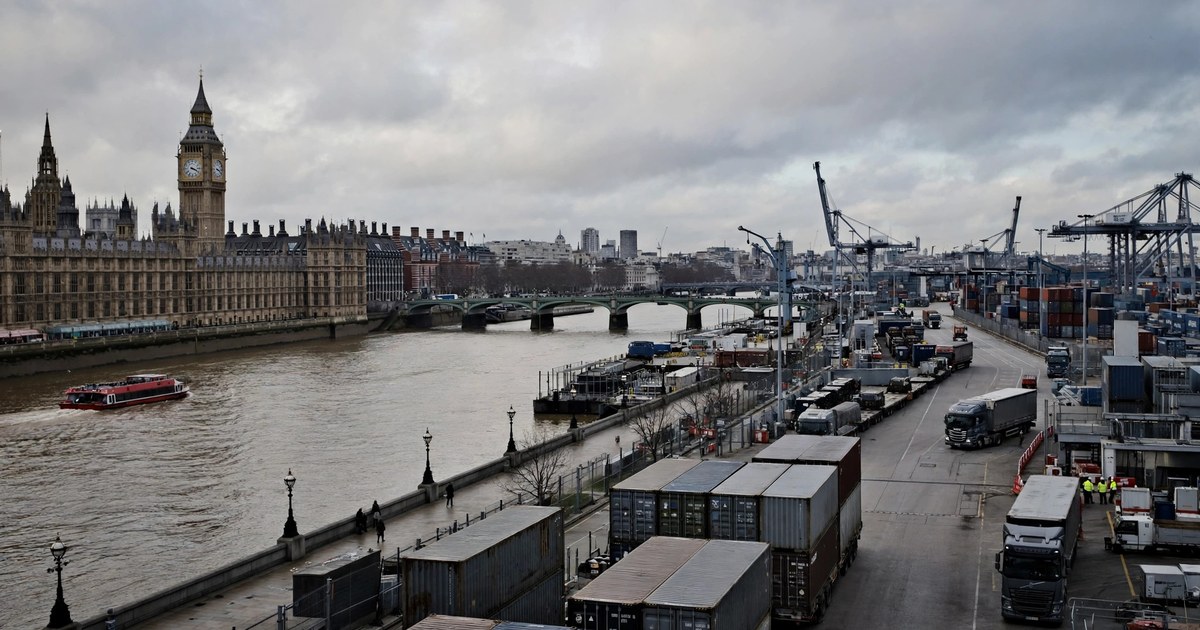
More than eight years after the referendum and several years after the United Kingdom formally left the European Union, Brexit is no longer a single event. It is a set of practical rules that now shape how goods cross borders, how people travel, and who can live and work in the UK and in EU countries.
This explainer sets out what has actually changed — and what has not — using official data and guidance rather than campaign claims from either side.
A Brief Timeline: From Referendum to New Relationship
On 23 June 2016, UK voters chose to leave the European Union by 52 percent to 48 percent. The result began a long negotiation over the terms of departure and the future relationship.
After several extensions, the UK left the EU on 31 January 2020 under a Withdrawal Agreement covering citizens’ rights, the financial settlement, and Northern Ireland. A transition period then kept the UK in the single market and customs union until 31 December 2020, while a new deal was negotiated.
That deal, the EU-UK Trade and Cooperation Agreement, was agreed on 24 December 2020 and applied from 1 January 2021. From that date, the UK was fully outside the single market and customs union, and the new rules on trade, travel, and movement took effect. Most practical changes in this article date from the end of transition, not from the 2020 exit day itself.
Trade: Tariff-Free, But Not Friction-Free
The Trade and Cooperation Agreement avoided tariffs and quotas. Goods traded between the UK and the EU remain tariff-free and quota-free in principle — welcomed by traders who had warned tariffs would raise costs for food, cars, and manufactured goods. Tariff-free, however, does not mean the same as before.
Customs checks and paperwork
While the UK was in the customs union, goods moved to and from the EU without customs declarations. That has ended. Traders must now complete customs declarations, provide safety and security information, and be ready for border checks.
For animal and plant products such as meat, dairy, and fresh produce, sanitary and phytosanitary checks, export health certificates, and pre-notification are now routine. The UK phased in import controls on EU goods in stages under its Border Target Operating Model. Business groups report the administration is manageable for large firms, but more burdensome for small businesses that previously traded only within the EU; some reduced or stopped EU sales, and others now pay customs agents.
Rules of origin
Tariff-free access applies only to goods that qualify as originating in the UK or the EU. A product assembled in the UK from parts imported from third countries may not qualify if not enough of its value was created in the UK or the EU.
Traders in sectors such as cars and food processing must keep evidence of where components came from; failure to prove origin can mean paying the standard tariff.
Services trade
Services — finance, law, consulting, creative industries, and technology — account for a large share of UK exports, but they were covered far less comprehensively than goods.
UK financial firms lost automatic "passporting" rights, which had allowed a London-authorised firm to serve clients across the EU. Some business moved to Amsterdam, Dublin, Paris, and Frankfurt, although London remains Europe’s largest financial centre. The EU has granted only limited, often temporary "equivalence" decisions. For other professions, qualifications are no longer automatically recognised in all cases, and rules now depend on the trade agreement, EU rules, and member state laws.
What the data suggest so far
Assessing the overall effect is contested, and complicated by the Covid-19 pandemic and energy price rises after Russia’s invasion of Ukraine. The Office for Budget Responsibility maintains that leaving will reduce long-run UK productivity by around 4 percent compared with remaining, mainly through lower trade intensity. Supporters of leaving argue this understates the benefits of regulatory independence and new non-EU trade deals, including with Australia, New Zealand, and the trans-Pacific CPTPP bloc. Critics point to Office for National Statistics data showing weaker goods trade with the EU than with the rest of the world since transition ended.
Travel: Short Trips Still Easy, Long Stays Different
For most holidaymakers, travel still feels familiar: no visa is needed for a short holiday, and flights and ferries operate as before. The underlying rules, however, have changed.
The 90/180 rule
UK citizens are now third-country nationals for the EU’s Schengen Area, which covers most EU countries plus Iceland, Norway, Switzerland, and Liechtenstein. They can visit for tourism or business meetings for up to 90 days in any 180-day period without a visa, across the Schengen Area as a whole — not 90 days per country.
Time in different Schengen countries adds up, so travellers with second homes or long trips must count days carefully; overstaying can lead to fines or entry bans. Ireland is separate: under the Common Travel Area, UK and Irish citizens can travel, live, and work in each other’s countries largely as before. EU citizens visiting the UK can generally stay up to six months without a visa, but cannot work as visitors.
Passports and border checks
UK passports must meet third-country entry rules for Schengen travel: issued less than 10 years before the date of entry, and valid for at least three months after the planned departure from the Schengen Area. The 10-year rule caught out some travellers whose passports had extra months added from early renewal under old UK practice.
At borders, UK travellers use non-EU lanes where they exist, and passports are stamped — set to change as the EU’s biometric Entry/Exit System is introduced. Flight rights and delay compensation continue in similar form under UK law, enforced by UK bodies.
Healthcare cover: EHIC to GHIC
The European Health Insurance Card (EHIC) entitled UK residents to state healthcare in EU countries on the same terms as local residents. Existing EHICs remained valid until expiry after Brexit.
Its replacement is the UK Global Health Insurance Card (GHIC), covering necessary state healthcare in EU countries, and some others under reciprocal arrangements, but not everywhere the EHIC did. Neither card replaces travel insurance for private treatment or repatriation. Mobile roaming has also changed: the EU ban on surcharges no longer applies to UK customers, and some operators have reintroduced daily charges.
Work and Study: Free Movement Has Ended
Perhaps the most fundamental change is the end of free movement — the right of EU citizens to live and work in the UK, and of UK citizens to live and work in EU countries, without needing permission.
The points-based immigration system
Since 1 January 2021, EU citizens arriving to work in the UK are treated under the same system as people from the rest of the world, except Irish citizens. The points-based system generally requires a job offer from a licensed sponsor at a required skill and salary level, with separate routes for students, graduates, health and care workers, and seasonal workers. EU citizens already living in the UK before transition ended could protect their status under the EU Settlement Scheme; several million applied, and similar schemes protected UK citizens in EU countries.
Employers in hospitality, agriculture, food processing, logistics, and social care reported recruitment difficulties after free movement ended, though the pandemic also played a part. Overall net migration rose to record levels after Brexit, driven mainly by non-EU work and study migration. For UK citizens wanting to work in the EU, there is no single EU-wide visa: each member state sets its own permit rules, and employers often must show a post cannot easily be filled locally.
Study: Erasmus replaced by Turing
The UK no longer participates in the EU’s Erasmus+ programme, which funded study and training exchanges across Europe. UK students can still study at European universities, but they pay the fees and follow the visa rules applying to non-EU students in each country. EU students coming to the UK are generally treated as international students for fees and visas.
In its place, the UK created the Turing Scheme, funding UK students and trainees to study or work abroad worldwide. Supporters say this broadens opportunities beyond Europe. Critics, including many universities, note Turing does not fund incoming students as Erasmus did, weakening reciprocal exchange. Both programmes continue, but they are no longer a shared system.
Northern Ireland: A Special Arrangement
Northern Ireland has a distinct position designed to avoid a hard border on the island of Ireland, a central concern in negotiations because of the Good Friday (Belfast) Agreement.
Under the original Northern Ireland Protocol and the revised Windsor Framework agreed in 2023, Northern Ireland remains aligned with EU rules for goods, so goods can move across the land border with Ireland without checks. At the same time, Northern Ireland remains part of the UK’s customs territory, and goods arriving from Great Britain face processes intended to distinguish goods staying in Northern Ireland from those moving on into the EU.
The Windsor Framework introduced simplified "green lane" arrangements for goods staying in Northern Ireland, while goods at risk of entering the EU use fuller procedures. The arrangements remain politically debated, but the aim — no border infrastructure on the island, with checks largely at ports — has been maintained.
What Has Stayed the Same
Several things have not changed. The UK and EU remain major trading partners, and most goods still cross without tariffs. Short tourist trips remain visa-free, and the Common Travel Area with Ireland continues. Residence rights acquired before transition ended were protected. The UK also remains a member of NATO, the Council of Europe, and the European Convention on Human Rights — none of which are EU institutions.
Frequently Asked Questions
Can UK citizens still move to an EU country to live and work?
Yes, but not automatically. You will normally need a residence and work permit from the specific country, often based on a job offer, self-employment, study, or family ties. Each EU country sets its own rules and processing times.
Do I need a visa for a holiday in Spain, France, or Italy?
No, not for a short trip. UK passport holders can spend up to 90 days in any 180-day period in the Schengen Area without a visa. Count days across all Schengen countries combined, and check your passport meets the 10-year issue and three-month validity rules.
Can EU citizens still work in the UK?
Those with status under the EU Settlement Scheme, and Irish citizens, can work freely. Other EU citizens arriving to work generally need a visa under the points-based system, usually with a sponsored job offer meeting skill and salary requirements.
Is my EHIC still valid?
Only until its expiry date. Most UK residents should now apply for a free GHIC through official government channels instead. Neither card replaces travel insurance.
Sources and Note
This explainer rests on official sources: UK government GOV.UK guidance on visiting Europe, the GHIC, and immigration; the EU-UK Trade and Cooperation Agreement and European Commission Brexit documentation; Office for National Statistics trade and migration data; and Office for Budget Responsibility assessments. National visa rules can change, so readers planning to move or work should check current official guidance for their destination. Policies reflect the position as generally reported up to late 2026.
Leave a Reply