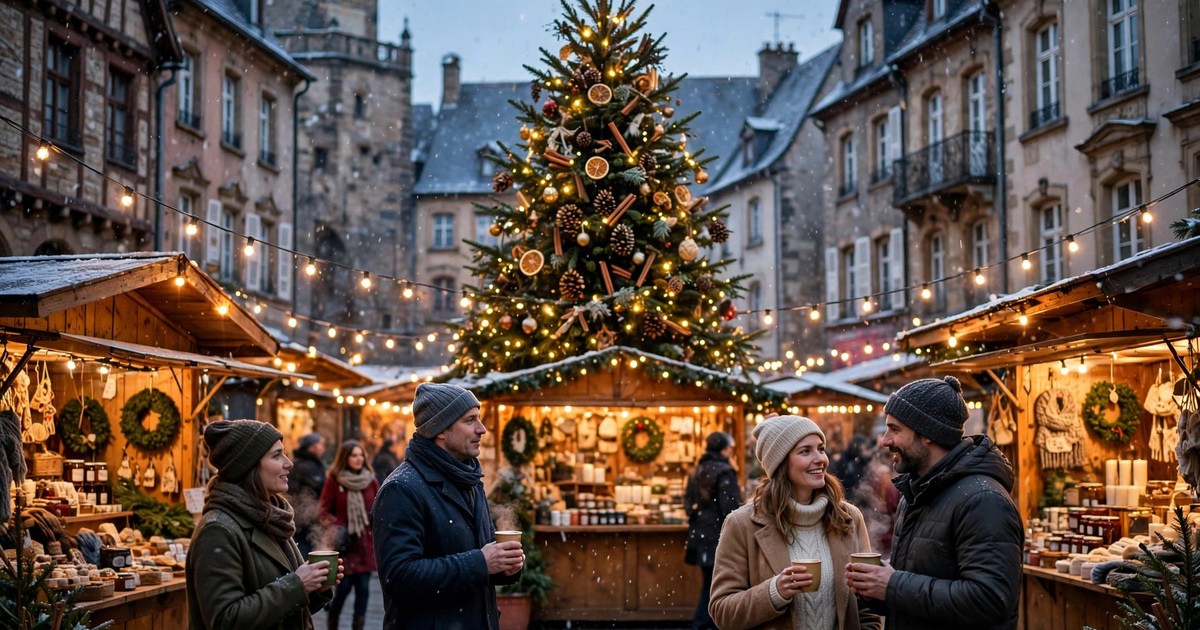
For a few weeks each winter, squares across Europe fill with wooden stalls, pine branches, lights, music, and the smell of roasted nuts, grilled sausages, gingerbread, and hot spiced wine. Christmas markets can be touristy and crowded — and, done well, they can also be one of the most joyful ways to experience a European city in winter. This complete guide explains where the tradition comes from, which markets are genuinely worth the trip, what to eat and buy, how much to budget, and how to enjoy them without freezing, overspending, or spending the whole evening in a queue.
Most large markets run from late November until just before Christmas, some continue between Christmas and New Year, and a few run into early January. Exact dates change every year and are set by each city, so always check the official market or city tourism website for the year you travel before booking trains or hotels.
A Short History of Christmas Markets
Christmas markets grew out of late medieval winter markets in German-speaking Europe. Towns were granted permission to hold special markets in Advent so residents could buy food, candles, and goods for the cold weeks and the Christmas feast. Vienna’s December market tradition is often traced to the late 13th century, while Dresden’s Striezelmarkt, first held in 1434, is frequently cited as one of Germany’s oldest Christmas markets. Nuremberg’s Christkindlesmarkt developed over the following centuries into the most famous example, with strict rules about what could be sold.
Vienna, Austria: The Elegant Classic
Vienna does Christmas with imperial confidence. The best-known market is the Viennese Dream Christmas Market in front of the Rathaus, the city hall, where a huge tree, ice-skating trails through the park, and rows of stalls sit under grand architecture. It is large and busy, but the setting carries it.
Strasbourg, France: The Capital of Christmas
Strasbourg, in Alsace near the German border, calls itself the Capital of Christmas, and it has a strong claim. Its Christkindelsmärik tradition dates to 1570, and today the market spreads across several squares in the Grande Île old town, each with a slightly different feel. The great tree in Place Kléber, the cathedral as a backdrop, and half-timbered streets decorated street by street make Strasbourg feel like a whole city participating, not a single fenced event.
Prague, Czech Republic: A Fairytale Setting
Prague’s main Christmas markets fill the Old Town Square and Wenceslas Square, with the Old Town Hall, Astronomical Clock, and a large tree setting the scene in the first, and a more commercial, food-heavy feel in the second. The setting is genuinely fairytale — Gothic and Baroque towers, carol singers, and, if you are lucky, snow.
Eat: trdelník is everywhere — it is popular with visitors, though its roots are not uniquely Czech — along with grilled sausages, potato pancakes, honey gingerbread, and hot mead. Keep valuables secure in the Old Town crowds, and use official exchange offices or cards rather than changing money on the street.
Budapest, Hungary: Big Squares, Good Food, Fair Prices
Budapest has grown into one of Europe’s best-value Christmas market cities. The market in Vörösmarty Square is the traditional centre, focused on Hungarian crafts and food, while the Advent Basilica market in front of St Stephen’s Basilica adds a light show projected on the church, an ice rink, and a lively evening atmosphere. The Basilica market has repeatedly been voted among Europe’s favourites in public polls, and even sceptics tend to enjoy an evening there.
Budapest’s advantage is the wider trip: after the markets you can warm up in the Széchenyi or Gellért thermal baths, take a Danube evening walk, and eat well for less than in Vienna or Strasbourg. Prices at stalls are still tourist prices, but hotels and restaurants away from the squares are noticeably better value.
Eat: chimney cake (kürtőskalács), lángos with sour cream and cheese, goulash served in a bread bowl in some stalls, and roasted chestnuts. Try a small cup first before committing to large portions — portions can be generous and prices are charged by weight for some foods, so check before you order.
Germany: Nuremberg, Cologne, Dresden, and Beyond
Germany is the homeland of the Christmas market, and choosing one depends on the trip you want.
Nuremberg’s Christkindlesmarkt is the iconic choice: red-and-white striped stalls in the main market square, a formal opening by the Christkind, and strict traditions about goods. Try Nürnberger Rostbratwurst, lebkuchen gingerbread, and zwetschgenmännle figures made from dried plums. It gets extremely crowded on weekends; visit midweek if you possibly can.
Cologne spreads its markets around the city, the largest beside the cathedral — a spectacular backdrop — with others including a harbour market and themed squares. Cologne is easy by train, good for a first German market trip, and lively in the evenings.
Dresden’s Striezelmarkt is for tradition and for stollen, the rich fruit bread named in the market’s own title. Dresden’s rebuilt old town, museums, and proximity to smaller Saxon towns make it a strong cultural trip.
What to Eat and Drink
Food is half the point. Across markets you will find grilled sausages, roasted nuts, gingerbread, potato pancakes, crêpes, waffles, soups, and regional specialities that change from city to city. Trying the local speciality is always better than eating the same generic snack everywhere: lebkuchen in Nuremberg, stollen in Dresden, lángos in Budapest, bredele in Strasbourg.
The signature drink is Glühwein in German-speaking markets — hot, spiced red wine — with white and rosé versions, alcohol-free punch, and hot chocolate widely available. In many markets you pay a deposit, called Pfand, on the mug; return it for the deposit back, or keep it as a souvenir if the rules allow and you have paid to do so. Mugs are dated and market-specific and make a cheap, genuinely used souvenir. Drink water too, pace the alcohol — it feels warmer than it makes you — and remember that a hot drink in a sit-down café is sometimes the smarter second drink.
What to Buy — and What to Skip
The best buys are handmade and local: wooden decorations and nutcrackers from Germany’s Erzgebirge region, glass ornaments, candles, ceramics, knitted goods, local honey, jam, biscuits, and food gifts you can legally and safely carry home. Talk to stallholders; at good markets many are the makers, and that conversation is part of the value.
Budgeting for a Christmas Market Trip
Stall prices are tourist prices everywhere. As an indicative guide, expect a mug of mulled wine or hot chocolate around €4–€8 plus a mug deposit, a sausage or similar hot snack €5–€10, and larger dishes €8–€16, with capital cities and famous squares at the top of those ranges. A relaxed evening at a market — two drinks, a main snack, a sweet, and one small gift — can easily reach €35–€60 per person.
Control costs by setting a cash budget for the evening, eating one proper meal in a normal restaurant away from the square, and choosing one or two quality gifts instead of many small ones. Hotels are the bigger cost: December weekends in Strasbourg, Vienna, and Nuremberg book up early and price accordingly. Midweek trips, staying a short tram ride from the centre, and booking refundable rooms early make the largest difference. Entry to most outdoor markets is free; ticketed attractions inside them, ice skating, and rides are extra.
Crowds, Cold, and Staying Comfortable
Crowds peak on Friday and Saturday evenings, on the first weekend after opening, and in the last days before Christmas. The same market at 11 a.m. on a Tuesday can feel like a different, better place. Arrive at opening time for browsing, return in the evening for the lights, and step into a church, museum, or café when the crush stops being fun.
Cold is the other reality. You will be standing still outdoors for hours, which feels far colder than walking in the same temperature. Wear a warm coat, hat, gloves, scarf, and — most importantly — waterproof boots with thick socks and room to move your toes. Thermal layers under normal clothes beat one very thick jumper. Take hand warmers if you feel the cold, keep your phone warm and charged because batteries drain faster in winter, and agree a meeting point in case you get separated and data fails.
How to Choose the Right Market for You
Choose by trip style, not by ranking lists. For a first market and maximum tradition, choose Nuremberg, Dresden, or Strasbourg. For a grand city break with music and museums, choose Vienna. For value and food plus thermal baths, choose Budapest. For a fairytale setting on a moderate budget, choose Prague or Kraków. For a family trip, look for markets with space, rides, and daytime activities — Cologne, Vienna’s Rathaus park, and Copenhagen’s Tivoli work well — and stay close enough to retreat for naps and warming up.
Tips for Families
Go early in the day when stalls are quieter and children can see. Many markets have carousels, small trains, nativity scenes, Santa or St Nicholas appearances, and craft activities — check the official programme for times rather than hoping to stumble on them. Bring a pushchair you can handle on cobbles and in crowds, or a carrier for very small children in the busiest squares. Plan a warm indoor break every 90 minutes or so, agree what treats are included before you arrive, and let each child choose one small decoration to take home — a defined choice prevents endless negotiations at every stall. Evenings are magical for older children, but a late afternoon visit that ends with dinner often works better than keeping tired children out late in the cold.
Frequently Asked Questions
When do European Christmas markets open?
Most large markets open in the last week of November and close on 23 or 24 December, though some run through the days between Christmas and New Year and a few into early January. Exact dates change every year — always check the official city or market website for your travel year.
Which is the best Christmas market in Europe?
There is no single best market. Nuremberg and Strasbourg are the most traditional famous names, Vienna is the most elegant city break, Budapest offers the best value and food, and Prague has one of the prettiest settings. The best choice depends on your budget, travel style, and how far you are travelling.
How much money should I bring to a market?
Bring a set evening budget — around €35–€60 per person covers drinks, food, and a small gift at most famous markets — plus a card for larger purchases. Many stalls now take cards, but cash is still useful and faster in crowds.
Are Christmas markets suitable for children?
Yes, especially during the day and in the early evening. Choose markets with rides, activities, and space, dress children warmly in waterproof footwear, and plan regular indoor breaks. The busiest Saturday evenings are the least enjoyable time for small children.
Sources / Note
Dates, traditions, and market details in this article are based on information published by official city tourism and market organisers for recent seasons and on widely documented market history. Exact opening dates, opening hours, programmes, and prices change every year and are indicative only here. Always check the official market or city website for the current year’s dates and prices, and check transport, accommodation, and entry requirements, before you travel.
Leave a Reply