Category: Europe Travel & Culture

Travel guides, city stories, food, arts, and culture from across Europe.

  • Public Holidays and Festivals in Europe: A Traveller’s Calendar Guide

    Public Holidays and Festivals in Europe: A Traveller’s Calendar Guide

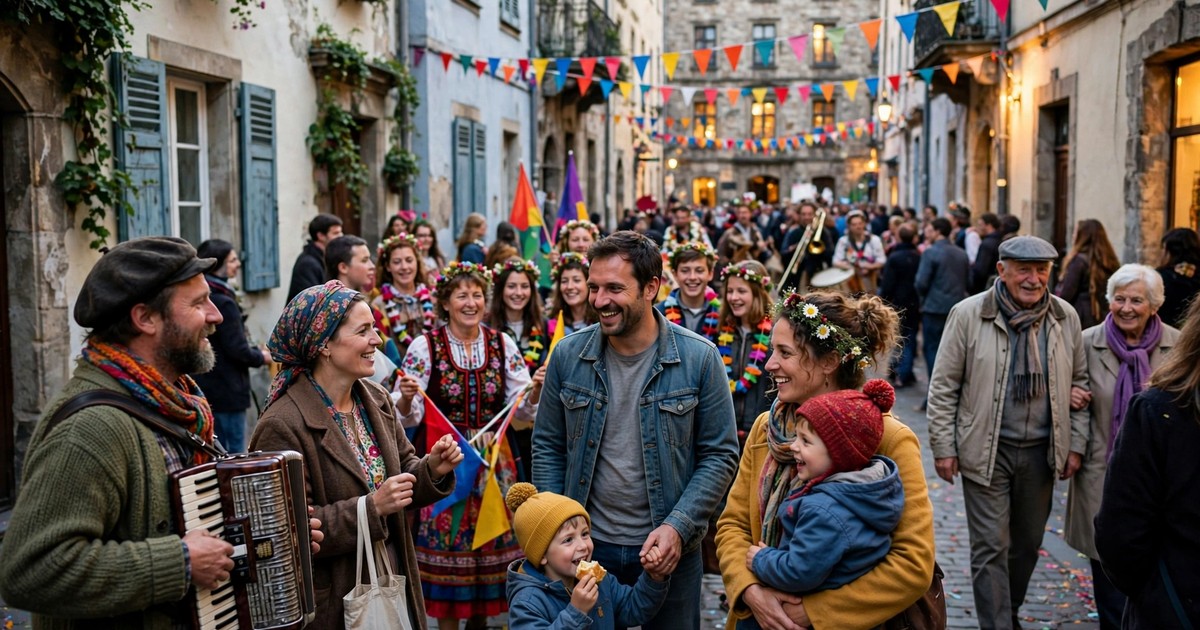
    Europe does not have one calendar. It has dozens — national holidays, regional holidays, religious feasts, school breaks, and city festivals that can fill a town with music for a week or close almost everything for a day. Arrive at the right moment and you might find a carnival parade, a midsummer bonfire, or streets decorated for a national day. Arrive unprepared on a major public holiday and you might find closed museums, reduced trains, and the most expensive hotel prices of the year.

    This guide walks through the year month by month, explains the major holidays, introduces famous festivals, and shows how to plan around — or deliberately for — the busiest dates. Dates move from year to year, especially those linked to Easter, so always check official dates for the year you travel.

    How Public Holidays Work in Europe

    Most European countries have between nine and fifteen public holidays a year. Some are nationwide; others apply only to a region, city, or religious community. Spain’s autonomous communities, Germany’s federal states, Switzerland’s cantons, and the United Kingdom’s constituent nations all have variations, so a shop closed in one city may be open in the next.

    Many holidays are Christian in origin — Christmas, Easter, Epiphany, Assumption, All Saints — while others mark national history: independence days, republic days, and liberation days. When a holiday falls on a weekend, some countries move the day off to a Monday or Friday; others do not. People also often “bridge” a Tuesday or Thursday holiday by taking the day in between off, creating a four-day weekend that fills trains and roads.

    The Year at a Glance: Month by Month

    January

    New Year’s Day on 1 January is a public holiday almost everywhere, with many businesses closed and transport on a Sunday service. Epiphany on 6 January is a holiday in countries including Spain, Italy, Austria, Poland, and Greece; in Spain it is a major gift-giving day, with Three Kings parades on 5 January. Orthodox Christmas falls on 7 January in some traditions. Otherwise January is quiet, cold, and relatively cheap for city travel, apart from ski resorts.

    February

    February is carnival season in many Catholic regions, with dates tied to Lent and changing each year. It is also a school holiday period in several countries, making Alpine ski areas busy and pricey. Expect short days in the north and some smaller beach-resort attractions still closed for winter.

    March

    St Patrick’s Day on 17 March is a public holiday in Ireland and a widely celebrated festival in Dublin and beyond. Depending on the year, Easter can fall in late March. Spring opens gardens and outdoor terraces in southern Europe, while the north can still feel wintry. Prices are usually moderate outside Easter week.

    April

    Easter dominates, with Good Friday, Easter Sunday, and Easter Monday observed in different combinations across countries. Holy Week processions in Spain are a major draw. King’s Day in the Netherlands on 27 April turns cities orange with street parties and flea markets. Tulip season and spring festivals make April popular without summer crowds.

    May

    May Day on 1 May is a public holiday in most of Europe, often with parades, concerts, and some closures. United Kingdom bank holidays, Victory in Europe commemorations around 8 or 9 May, Ascension Day, and Whit Monday create long weekends whose pattern varies by country. May is one of the best months to travel: warm in the south, green in the north, and usually cheaper than summer.

    June

    Midsummer is the highlight in Scandinavia and the Baltic states, celebrated around the solstice, typically the weekend nearest 19–25 June, with maypoles, bonfires, and countryside gatherings. National days include Italy’s Republic Day on 2 June, Sweden’s National Day on 6 June, and Portugal Day on 10 June. Corpus Christi is a holiday in several Catholic regions. Days are longest and prices start to climb.

    July

    France’s Bastille Day on 14 July brings fireworks and parades, and Belgium’s National Day follows on 21 July. Spain’s Running of the Bulls takes place during San Fermín in Pamplona in early to mid-July. School holidays begin across most of the continent, beaches fill, and this is peak season for prices and crowds, especially in the Mediterranean.

    August

    August is Europe’s traditional holiday month. Many locals, particularly in France, Italy, and Spain, take annual leave; some independent businesses close for part of the month, and resorts are at their busiest and most expensive. Assumption Day on 15 August is a public holiday in many Catholic countries and marks the height of Italy’s Ferragosto period. Edinburgh’s festivals dominate Scotland’s capital all month. Capitals can feel oddly calm while coasts are packed.

    September

    September offers a sweet spot: warm seas, harvest season, and falling prices as schools return. Germany’s Oktoberfest actually begins in mid-September in Munich, and grape harvest festivals appear in wine regions across Europe. Cultural seasons reopen in many cities.

    October

    Oktoberfest usually ends in early October, around German Unity Day on 3 October. Halloween on 31 October is increasingly celebrated but is a public holiday in only a few places. Autumn colours, food festivals, and lower prices make October attractive, though northern days shorten quickly.

    November

    All Saints’ Day on 1 November is a public holiday in many Catholic countries, when cemeteries are visited and some businesses close. Remembrance commemorations fall on 11 November in France, Belgium, and the United Kingdom. Lantern processions for St Martin’s Day and the traditional opening of carnival season on 11 November in parts of Germany add local colour. Late November sees Christmas markets begin in many German, Austrian, and Central European cities. Otherwise November is one of the cheapest months.

    December

    December is defined by Christmas markets, St Nicholas traditions around 5–6 December in the Netherlands, Germany, and elsewhere, and St Lucia in Sweden on 13 December. Christmas Day on 25 December and St Stephen’s Day or Boxing Day on 26 December are major holidays when almost everything closes. New Year’s Eve on 31 December brings fireworks and large celebrations, with some cities requiring tickets for central zones. Book December travel early.

    Major Holidays Explained

    New Year customs differ: Hogmanay in Scotland lasts several days, Spain eats twelve grapes at midnight, and many cities stage official fireworks. Easter is movable, calculated from the spring full moon, which is why it shifts between late March and late April and why carnival, Lent, and Holy Week shift with it. Orthodox Easter often falls on a different date from Western Easter, which matters in Greece and parts of Eastern Europe.

    May Day combines labour marches with older spring customs such as maypoles in Germany and Austria and lilies of the valley in France. Christmas is family-centred almost everywhere; in much of Central and Northern Europe the main celebration is on Christmas Eve, 24 December, which can mean early closures even where it is not a formal holiday. National days — France on 14 July, Spain on 12 October, Italy on 2 June, and many others — usually mean parades, flags, special museum programmes in some capitals, and closed offices.

    Famous Festivals Worth Planning Around

    Carnival takes many forms. Venice Carnival, in the weeks before Lent, fills the city with masks and costume balls and pushes hotel prices sharply upward. Carnivals in Cologne, Düsseldorf, and Mainz feature parades on Rose Monday, while Nice and cities across France and Spain hold versions with floats and satire. Each is a local European tradition in its own style, quite different from the others — and from Rio-style carnivals elsewhere in the world.

    Oktoberfest in Munich, from mid-September to early October, is the world’s best-known beer festival, with large tents, traditional dress, and millions of visitors; book accommodation months ahead. La Tomatina in Buñol is a one-day tomato-throwing festival in late August with ticketed, capped entry. Edinburgh in August hosts the Fringe, the International Festival, and the Royal Edinburgh Military Tattoo at once, effectively doubling the city’s population. Scandinavian midsummer, Spain’s Holy Week, King’s Day, and countless local wine, music, and film festivals reward travellers who check a city’s events calendar before fixing dates.

    How Holidays Affect Transport, Shops, and Sightseeing

    On a public holiday, expect a Sunday pattern: reduced transport timetables, closed banks, post offices, government offices, and many smaller shops, and in some countries closed supermarkets. Large shopping centres, transport-hub shops, and tourist-area restaurants often stay open, but do not rely on it. Museums vary — some close on Mondays anyway, some open on holidays and close the following day, and some offer special programmes. Pharmacies operate emergency rotas.

    The days around a holiday can matter more than the day itself. Trains and flights book out before long weekends, motorways jam on getaway afternoons, and attractions sell timed tickets faster. Conversely, business districts can be pleasantly quiet, and business hotels sometimes discount even as leisure resorts raise prices.

    Planning Around — or Avoiding — Peak Dates

    Start by checking three calendars for your destination: national public holidays, regional holidays, and school holidays, plus the city’s festival dates. If your goal is a festival, embrace the peak: book transport and accommodation early, consider staying near a transport line rather than in the very centre if prices are extreme, and reserve headline attractions in advance.

    If your goal is sightseeing at lower cost, travel just before or after a major event, choose weekdays over the holiday weekend, and consider second cities without the headline festival. Shoulder months — May, June, September, and early October — offer the best balance of weather, open attractions, and manageable prices in much of Europe. Whenever a date is described as “typical,” confirm it: Easter-based feasts move, and festivals occasionally change weekends.

    Regional Differences to Keep in Mind

    Religion, history, and federal structure explain most variation. Catholic regions observe Epiphany, Corpus Christi, Assumption, and All Saints more widely; Protestant regions may mark Reformation Day or Whit Monday; Orthodox countries follow a different Easter pattern. Within one country, Bavaria has more holidays than Berlin, and Scotland differs from England. Never assume one city’s holiday timetable applies in the next, even across a short border.

    Frequently Asked Questions

    How can I find the exact public holidays for my trip?

    Check the official government or national tourism website for your destination country and region, and confirm the year of travel. Holidays that fall on weekends, regional holidays, and one-off changes are usually listed there, and festival organisers publish confirmed dates each year.

    Are shops and museums closed on every public holiday?

    Not always, and not everywhere. Banks, offices, and smaller shops commonly close, while major attractions, transport-hub shops, and tourist-area businesses may open with reduced hours. Always check the specific venue’s holiday hours before planning a day around it.

    Is it better to travel during a festival or avoid it?

    It depends on your goal. Festivals offer atmosphere you cannot get at any other time, but they bring higher prices and larger crowds. If the festival is not your reason for going, travelling a week earlier or later usually gives you the same city with lower costs and easier bookings.

    Why do Easter and carnival dates change every year?

    They are calculated from the lunar-linked church calendar rather than fixed dates. Easter Sunday is set by the first full moon of spring, and carnival, Lent, Ascension, and Pentecost are counted from Easter, so the whole group of holidays moves together each year.

    Sources / Note

    This guide is based on general information published by European tourism boards, government holiday calendars, city authorities, and festival organisers. Holidays and festival schedules change yearly and differ between countries and regions, so verify exact dates and opening arrangements on official sources for your year and destination. Dates given as months or typical periods are indicative only. This article is general travel information, not an official calendar.

  • How to Avoid Tourist Scams in Europe’s Most Visited Cities

    How to Avoid Tourist Scams in Europe’s Most Visited Cities

    Europe welcomes tens of millions of visitors every year, and the overwhelming majority of trips are safe and trouble-free. Most people you meet are honest and helpful. At the same time, places that attract large crowds also attract a small number of opportunists who make a living from distracted visitors. Knowing how the most common tricks work is usually enough to avoid them. You just need a few good habits, awareness in busy places, and a plan for what to do if something goes wrong.

    This guide covers the problems travellers report most often, from pickpocketing and taxi overcharging to restaurant bill tricks and fake tickets, with city-agnostic advice that works across Europe’s most visited cities.

    Pickpocketing: The Most Common Risk

    Pickpocketing is theft rather than a scam, but it is the problem travellers are most likely to face, especially on crowded metro lines, at busy stations, in markets, and around famous landmarks where people stop suddenly to take photographs.

    Teams often work together. One person creates a distraction or bottleneck — stopping abruptly at a ticket gate, asking a question, spilling something, or boarding a train and then stepping back — while another lifts a wallet or phone from an open bag or back pocket. Crowded escalators and packed trams are common settings, because close contact feels normal there. Phones left on café tables and bags hung on chair backs are also frequent targets.

    Keep valuables in a front pocket, a zipped inside pocket, or a bag worn across your body with the zip facing you. In crowds, keep a hand on the bag. Split your money: carry a small amount of cash for the day and keep the rest, plus a backup card, separate in your accommodation or another pocket. If one wallet is lost, the trip is not ruined. Be extra alert when boarding and leaving transport, when someone bumps into you, and when a stranger creates sudden close contact. Keep your phone in your hand or pocket in cafés rather than on the table edge, and back up photos and enable device tracking before you travel.

    Fake Taxis and Overcharging

    Transport from airports and stations is where many visitors lose money in the first hour of a trip. You arrive tired, a driver approaches inside the terminal offering a ride, and the final price is far higher than expected — because there was no meter, the meter was not reset, or the route was unnecessarily long.

    Use the official taxi rank outside the terminal rather than accepting offers from drivers who approach you inside. Check that the car has a licence, a company name, and a working meter, and ask for an approximate fare or confirm the meter will be used. Many cities have fixed airport-to-centre fares; look these up before you land or check the airport’s official information board on arrival.

    Ride-hailing and licensed local taxi apps help because price, route, driver, and plate are recorded in advance. If you book a hotel transfer, confirm the total price in writing. Ask about luggage charges beforehand, and ask for a receipt — a receipt with a taxi number makes a complaint possible and often prevents overcharging. If a driver refuses the meter or claims it is broken, politely decline and take the next car.

    Restaurant and Café Bill Tricks

    Most European restaurants are straightforward, but busy tourist areas produce recurring complaints: menus without prices, dishes brought to the table that you did not order — such as bread, olives, or water — and then charged for, bills with items added, or a service charge counted twice. Another version is a friendly invitation into a bar by a street promoter, where drinks cost far more than expected and no priced menu was ever shown.

    Choose places with a clear, priced menu displayed outside. If prices are missing for items sold by weight, such as fresh fish, ask for a total estimate before ordering. In some countries a bread or cover charge is normal, but it should be listed on the menu; if you do not want unordered items, send them back untouched. Check the bill line by line before paying — that habit catches most errors, honest or otherwise. Confirm whether service is included, and tip according to local custom. If invited in from the street, insist on seeing a priced menu first.

    Ticket Scams and Fake Attractions

    Wherever there are famous sights, there are unofficial sellers. Travellers report fake or invalid tickets sold outside venues, on social media, or through lookalike websites that copy official branding and add large fees. Others are sold a “skip-the-line” pass that does not include entry at all, or a tour that never materialises. A related trick is the “closed today” story, which steers you toward an alternative tour or shop where commission is built into the price.

    Buy tickets from the attraction’s official website, its ticket office, or a well-known authorised reseller. Check the web address carefully — small spelling changes are a common trick. Book popular attractions in advance, because sold-out official tickets push people toward risky resellers. Keep confirmations, and check what is included: entry, timed slot, guide, and extras. If someone says a major attraction is closed, verify it at the entrance or on the official site. Never hand over your passport to unofficial sellers.

    Distraction Tricks, Petitions, and Friendship Bracelets

    Some of the oldest street tricks rely on putting something in your hand or getting you to stop. A person ties a “friendship bracelet” around your wrist and then demands payment. Someone thrusts a rose or trinket at you and refuses to take it back without money. A clipboard petition — supposedly for a good cause — distracts you while an accomplice goes through your bag, or pressures you into a “donation” afterwards. Other distractions include someone pointing out a stain on your jacket and offering to help clean it, or a group surrounding you with a map or newspaper.

    A firm “no, thank you,” hands kept out of the way, and walking on works in almost every case. Do not let anyone tie, pin, or place something on you. If something is forced into your hand, set it down calmly and walk away. Keep bags zipped and in front of you whenever you stop to talk to a stranger, sign nothing on the street, and be wary of anyone who gets unusually close while asking for help.

    ATM and Card Skimming

    Card fraud is less visible but can be more costly. Skimming devices fitted to ATMs can capture card details, sometimes with a tiny camera recording your PIN. Travellers are also steered to private, high-fee cash machines offering poor exchange rates, or distracted at an ATM by a “helpful” stranger.

    Prefer ATMs attached to a bank, ideally inside or beside a branch, over isolated machines. Give the card slot a light tug — a loose or bulky fitting is a warning sign — and cover the keypad with your other hand when entering your PIN, every time. When a machine or terminal asks whether you want to pay or withdraw in your home currency, choose the local currency instead; paying in your home currency usually means a worse exchange rate set by the operator. Decline offers of help at ATMs, and if a machine keeps your card, contact your bank immediately rather than accepting assistance from bystanders. Enable transaction alerts, set sensible daily limits, carry a second card stored separately, and review transactions during the trip so anything suspicious can be frozen quickly.

    A City-Agnostic Prevention Checklist

    One related warning: people occasionally pose as plain-clothes police, demand to see your wallet, or ask for an on-the-spot fine. Genuine officers do not inspect your cash or collect fines in cash on the street. Ask for identification, suggest going to a police station, and keep hold of your wallet.

    • Research normal prices for airport transfers, key tickets, and typical meals before you arrive.
    • Book accommodation, major tickets, and transfers through official or well-reviewed channels, and keep confirmations offline.
    • Carry only what you need for the day; leave spare cards secured at your accommodation where practical, and carry a copy of your passport ID page.
    • Use a cross-body bag with zips, keep phones out of back pockets, and stay alert in crowds, stations, and markets.
    • Agree prices in advance for taxis, tours, and anything without a printed price.
    • Pay by card where possible for a record, choose local currency, and check bills and change.
    • Trust discomfort. If an offer feels rushed, secretive, or too good to be true, step away. There is almost always another option a minute later.

    What to Do If You Are Scammed

    First, stay safe. Do not chase or confront a group, and move to a public, staffed place such as a shop, hotel, or station desk. If money is still being demanded and you feel threatened, treat it as an emergency and call for help.

    If your card may be compromised, freeze it in your banking app or call your bank immediately. Change passwords if your phone is stolen, and mark the device as lost. Report theft or fraud to the local police and ask for a written report or reference number; you will usually need it for travel insurance, card disputes, and replacing documents. Many insurers and banks have deadlines, so report promptly and keep receipts, screenshots, and confirmations as evidence. If your passport is lost or stolen, contact your country’s embassy or consulate for emergency travel documents.

    Being scammed is frustrating, but it is not a personal failure. These tricks are practised daily on experienced travellers and locals too. Reporting helps the next visitor, and acting quickly limits the damage.

    Emergency Numbers and Reporting

    Across the European Union, and in many neighbouring countries, 112 is the free emergency number for police, fire, and ambulance, and operators can often connect you to English-speaking support. In the United Kingdom and Ireland, 999 also works, and 112 works there too. Save before you travel: the local non-emergency police number, your bank’s card-blocking number, your insurer’s assistance line, and your embassy or consulate — offline too, in case your phone is lost.

    Frequently Asked Questions

    Are European cities unsafe for tourists?

    No. Most visits are completely trouble-free, and violent crime against tourists is uncommon. The main risks in busy areas are petty theft and overcharging, which awareness and a few habits greatly reduce.

    Should I carry my passport with me at all times?

    Rules vary, and some countries require visitors to carry identification. Many travellers carry a copy or phone photo of the passport page for everyday use and keep the original secured, but check the requirement for your destination and follow local law.

    Is it safer to pay by card or cash?

    Both have a place. Cards create a record, can be frozen quickly, and support chargebacks. Small cash is useful for markets, small cafés, and tips. Splitting payment methods, and not carrying all your money in one place, is the safest approach.

    What should I do first if my wallet is stolen?

    Get to a safe place, freeze your cards immediately through your banking app or by phone, then report the theft to the police and request a report reference for insurance and card disputes. After that, contact your insurer and, if your passport was taken, your embassy or consulate.

    Sources / Note

    This article is a general travel-safety guide based on widely published advice from European police forces, consumer protection bodies, transport authorities, and travel insurers. Rules, fares, and reporting procedures vary by country and city, so check official local sources before you travel. Emergency information reflects the 112 number used across the European Union. Nothing here accuses any specific business; examples describe general patterns. This guide is general information only, not legal or financial advice.

  • Christmas Markets in Europe: The Complete Guide to the Best Ones

    Christmas Markets in Europe: The Complete Guide to the Best Ones

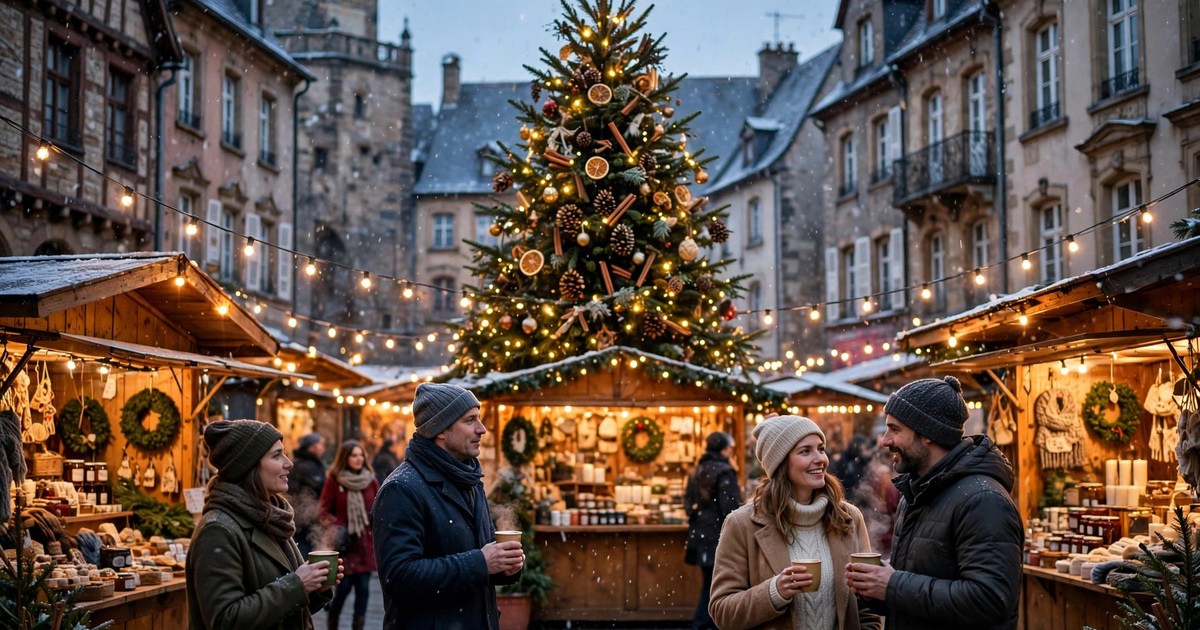
    For a few weeks each winter, squares across Europe fill with wooden stalls, pine branches, lights, music, and the smell of roasted nuts, grilled sausages, gingerbread, and hot spiced wine. Christmas markets can be touristy and crowded — and, done well, they can also be one of the most joyful ways to experience a European city in winter. This complete guide explains where the tradition comes from, which markets are genuinely worth the trip, what to eat and buy, how much to budget, and how to enjoy them without freezing, overspending, or spending the whole evening in a queue.

    Most large markets run from late November until just before Christmas, some continue between Christmas and New Year, and a few run into early January. Exact dates change every year and are set by each city, so always check the official market or city tourism website for the year you travel before booking trains or hotels.

    A Short History of Christmas Markets

    Christmas markets grew out of late medieval winter markets in German-speaking Europe. Towns were granted permission to hold special markets in Advent so residents could buy food, candles, and goods for the cold weeks and the Christmas feast. Vienna’s December market tradition is often traced to the late 13th century, while Dresden’s Striezelmarkt, first held in 1434, is frequently cited as one of Germany’s oldest Christmas markets. Nuremberg’s Christkindlesmarkt developed over the following centuries into the most famous example, with strict rules about what could be sold.

    Vienna, Austria: The Elegant Classic

    Vienna does Christmas with imperial confidence. The best-known market is the Viennese Dream Christmas Market in front of the Rathaus, the city hall, where a huge tree, ice-skating trails through the park, and rows of stalls sit under grand architecture. It is large and busy, but the setting carries it.

    Strasbourg, France: The Capital of Christmas

    Strasbourg, in Alsace near the German border, calls itself the Capital of Christmas, and it has a strong claim. Its Christkindelsmärik tradition dates to 1570, and today the market spreads across several squares in the Grande Île old town, each with a slightly different feel. The great tree in Place Kléber, the cathedral as a backdrop, and half-timbered streets decorated street by street make Strasbourg feel like a whole city participating, not a single fenced event.

    Prague, Czech Republic: A Fairytale Setting

    Prague’s main Christmas markets fill the Old Town Square and Wenceslas Square, with the Old Town Hall, Astronomical Clock, and a large tree setting the scene in the first, and a more commercial, food-heavy feel in the second. The setting is genuinely fairytale — Gothic and Baroque towers, carol singers, and, if you are lucky, snow.

    Eat: trdelník is everywhere — it is popular with visitors, though its roots are not uniquely Czech — along with grilled sausages, potato pancakes, honey gingerbread, and hot mead. Keep valuables secure in the Old Town crowds, and use official exchange offices or cards rather than changing money on the street.

    Budapest, Hungary: Big Squares, Good Food, Fair Prices

    Budapest has grown into one of Europe’s best-value Christmas market cities. The market in Vörösmarty Square is the traditional centre, focused on Hungarian crafts and food, while the Advent Basilica market in front of St Stephen’s Basilica adds a light show projected on the church, an ice rink, and a lively evening atmosphere. The Basilica market has repeatedly been voted among Europe’s favourites in public polls, and even sceptics tend to enjoy an evening there.

    Budapest’s advantage is the wider trip: after the markets you can warm up in the Széchenyi or Gellért thermal baths, take a Danube evening walk, and eat well for less than in Vienna or Strasbourg. Prices at stalls are still tourist prices, but hotels and restaurants away from the squares are noticeably better value.

    Eat: chimney cake (kürtőskalács), lángos with sour cream and cheese, goulash served in a bread bowl in some stalls, and roasted chestnuts. Try a small cup first before committing to large portions — portions can be generous and prices are charged by weight for some foods, so check before you order.

    Germany: Nuremberg, Cologne, Dresden, and Beyond

    Germany is the homeland of the Christmas market, and choosing one depends on the trip you want.

    Nuremberg’s Christkindlesmarkt is the iconic choice: red-and-white striped stalls in the main market square, a formal opening by the Christkind, and strict traditions about goods. Try Nürnberger Rostbratwurst, lebkuchen gingerbread, and zwetschgenmännle figures made from dried plums. It gets extremely crowded on weekends; visit midweek if you possibly can.

    Cologne spreads its markets around the city, the largest beside the cathedral — a spectacular backdrop — with others including a harbour market and themed squares. Cologne is easy by train, good for a first German market trip, and lively in the evenings.

    Dresden’s Striezelmarkt is for tradition and for stollen, the rich fruit bread named in the market’s own title. Dresden’s rebuilt old town, museums, and proximity to smaller Saxon towns make it a strong cultural trip.

    What to Eat and Drink

    Food is half the point. Across markets you will find grilled sausages, roasted nuts, gingerbread, potato pancakes, crêpes, waffles, soups, and regional specialities that change from city to city. Trying the local speciality is always better than eating the same generic snack everywhere: lebkuchen in Nuremberg, stollen in Dresden, lángos in Budapest, bredele in Strasbourg.

    The signature drink is Glühwein in German-speaking markets — hot, spiced red wine — with white and rosé versions, alcohol-free punch, and hot chocolate widely available. In many markets you pay a deposit, called Pfand, on the mug; return it for the deposit back, or keep it as a souvenir if the rules allow and you have paid to do so. Mugs are dated and market-specific and make a cheap, genuinely used souvenir. Drink water too, pace the alcohol — it feels warmer than it makes you — and remember that a hot drink in a sit-down café is sometimes the smarter second drink.

    What to Buy — and What to Skip

    The best buys are handmade and local: wooden decorations and nutcrackers from Germany’s Erzgebirge region, glass ornaments, candles, ceramics, knitted goods, local honey, jam, biscuits, and food gifts you can legally and safely carry home. Talk to stallholders; at good markets many are the makers, and that conversation is part of the value.

    Budgeting for a Christmas Market Trip

    Stall prices are tourist prices everywhere. As an indicative guide, expect a mug of mulled wine or hot chocolate around €4–€8 plus a mug deposit, a sausage or similar hot snack €5–€10, and larger dishes €8–€16, with capital cities and famous squares at the top of those ranges. A relaxed evening at a market — two drinks, a main snack, a sweet, and one small gift — can easily reach €35–€60 per person.

    Control costs by setting a cash budget for the evening, eating one proper meal in a normal restaurant away from the square, and choosing one or two quality gifts instead of many small ones. Hotels are the bigger cost: December weekends in Strasbourg, Vienna, and Nuremberg book up early and price accordingly. Midweek trips, staying a short tram ride from the centre, and booking refundable rooms early make the largest difference. Entry to most outdoor markets is free; ticketed attractions inside them, ice skating, and rides are extra.

    Crowds, Cold, and Staying Comfortable

    Crowds peak on Friday and Saturday evenings, on the first weekend after opening, and in the last days before Christmas. The same market at 11 a.m. on a Tuesday can feel like a different, better place. Arrive at opening time for browsing, return in the evening for the lights, and step into a church, museum, or café when the crush stops being fun.

    Cold is the other reality. You will be standing still outdoors for hours, which feels far colder than walking in the same temperature. Wear a warm coat, hat, gloves, scarf, and — most importantly — waterproof boots with thick socks and room to move your toes. Thermal layers under normal clothes beat one very thick jumper. Take hand warmers if you feel the cold, keep your phone warm and charged because batteries drain faster in winter, and agree a meeting point in case you get separated and data fails.

    How to Choose the Right Market for You

    Choose by trip style, not by ranking lists. For a first market and maximum tradition, choose Nuremberg, Dresden, or Strasbourg. For a grand city break with music and museums, choose Vienna. For value and food plus thermal baths, choose Budapest. For a fairytale setting on a moderate budget, choose Prague or Kraków. For a family trip, look for markets with space, rides, and daytime activities — Cologne, Vienna’s Rathaus park, and Copenhagen’s Tivoli work well — and stay close enough to retreat for naps and warming up.

    Tips for Families

    Go early in the day when stalls are quieter and children can see. Many markets have carousels, small trains, nativity scenes, Santa or St Nicholas appearances, and craft activities — check the official programme for times rather than hoping to stumble on them. Bring a pushchair you can handle on cobbles and in crowds, or a carrier for very small children in the busiest squares. Plan a warm indoor break every 90 minutes or so, agree what treats are included before you arrive, and let each child choose one small decoration to take home — a defined choice prevents endless negotiations at every stall. Evenings are magical for older children, but a late afternoon visit that ends with dinner often works better than keeping tired children out late in the cold.

    Frequently Asked Questions

    When do European Christmas markets open?

    Most large markets open in the last week of November and close on 23 or 24 December, though some run through the days between Christmas and New Year and a few into early January. Exact dates change every year — always check the official city or market website for your travel year.

    Which is the best Christmas market in Europe?

    There is no single best market. Nuremberg and Strasbourg are the most traditional famous names, Vienna is the most elegant city break, Budapest offers the best value and food, and Prague has one of the prettiest settings. The best choice depends on your budget, travel style, and how far you are travelling.

    How much money should I bring to a market?

    Bring a set evening budget — around €35–€60 per person covers drinks, food, and a small gift at most famous markets — plus a card for larger purchases. Many stalls now take cards, but cash is still useful and faster in crowds.

    Are Christmas markets suitable for children?

    Yes, especially during the day and in the early evening. Choose markets with rides, activities, and space, dress children warmly in waterproof footwear, and plan regular indoor breaks. The busiest Saturday evenings are the least enjoyable time for small children.

    Sources / Note

    Dates, traditions, and market details in this article are based on information published by official city tourism and market organisers for recent seasons and on widely documented market history. Exact opening dates, opening hours, programmes, and prices change every year and are indicative only here. Always check the official market or city website for the current year’s dates and prices, and check transport, accommodation, and entry requirements, before you travel.

  • Cheapest European Countries to Travel in 2026 Without Cutting Corners

    Cheapest European Countries to Travel in 2026 Without Cutting Corners

    Europe has a reputation for being expensive, and in cities like Paris, Zurich, Copenhagen, and Amsterdam, that reputation is well earned. But Europe is not one price level. Travel a few hundred kilometres east or south, choose shoulder season instead of August, and eat where local families eat, and the same continent can feel surprisingly affordable — without hostels with broken showers, without skipping museums, and without living on plain bread.

    This guide looks at the cheapest European countries to travel in 2026 where a lower budget still buys a good experience: comfortable small hotels and apartments, sit-down meals, reliable trains and buses, historic old towns, mountains, and coastlines. All prices below are indicative ranges for 2026 planning, not guarantees. Exchange rates, inflation, and local events move prices quickly, so always check current costs before you book.

    How to Read the Daily Budgets in This Guide

    A useful daily budget includes three things: where you sleep, what you eat and drink, and how you move around, plus one paid activity. It does not include international flights to reach the country.

    As a rough guide for the countries below:

    • Budget traveller: €35–€60 per day — private room or good hostel, bakery breakfasts, one simple restaurant meal, public transport, free walking tours and one low-cost attraction.
    • Mid-range traveller: €60–€110 per day — central 3-star hotel or apartment, two restaurant meals, intercity trains, museums and day trips.
    • Comfortable traveller: €110–€160 per day — better hotel, nicer restaurants, taxis occasionally, guided tours — still far below a similar day in Western Europe’s most expensive capitals.

    Albania: The Mediterranean Without Mediterranean Prices

    Albania is often the first name mentioned for value in 2026, and for good reason. It has an Adriatic and Ionian coastline, Ottoman old towns, Roman ruins, and dramatic mountains — at prices that feel a decade behind neighbouring Greece and Italy.

    Tirana, the capital, is lively, colourful, and easy to enjoy on foot. Museums, cable-car views from Mount Dajti, and a strong café culture fill a day cheaply. On the coast, Sarandë and Ksamil are popular for beaches, while Berat and Gjirokastër offer stone old towns that are UNESCO-listed and far quieter.

    Indicative costs: a mid-range double room €35–€65, a main course in a local restaurant €6–€12, a city bus ride under €1, and intercity buses €5–€15 depending on distance. A mid-range day often lands around €55–€85.

    Best value bases: Tirana for transport links, Berat for history, and Shkodër as a gateway to the Albanian Alps around Theth and Valbona, where guesthouse stays with home-cooked meals are excellent value.

    Practical note: cash is still useful outside Tirana, cards are not accepted everywhere, and mountain roads take longer than the map suggests. Allow time rather than spending money rushing.

    North Macedonia: Lakes, History, and Very Low Everyday Costs

    North Macedonia is one of Europe’s best-value landlocked countries. Skopje mixes grand squares, an old bazaar, and fortress views, while Lake Ohrid — one of Europe’s oldest and deepest lakes — is the real highlight. Ohrid’s churches, lakeside promenades, and boat trips feel like a resort holiday at inland prices.

    Indicative costs: mid-range rooms €30–€55, restaurant mains €5–€10, local wine and beer very affordable, and buses between Skopje and Ohrid typically €8–€14. A comfortable day can stay near €50–€80.

    Food helps the budget here. Grilled meats, shopska salad, baked beans known as tavče gravče, and fresh lake fish in Ohrid are filling and inexpensive in family-run restaurants away from the main lakefront.

    Bulgaria: Black Sea Coast, Mountains, and Historic Cities

    Bulgaria offers variety for the money: Sofia’s churches and museums, Plovdiv’s Roman amphitheatre and old town, Veliko Tarnovo’s fortress, Bansko and Borovets for skiing and hiking, and Black Sea resorts around Varna and Burgas.

    Prices rise in Sunny Beach in August and in ski resorts at New Year, but outside those peaks Bulgaria is consistently affordable. Indicative costs: mid-range hotel €35–€60, restaurant main €7–€13, a day lift pass in season often cheaper than in the Alps by a wide margin, and trains or buses between major cities €6–€16.

    Romania: Castles, Medieval Towns, and Great Train Value

    Romania gives travellers a lot of country for their money. Bucharest has grand boulevards and a lively old town, Brașov sits under forested mountains near Bran Castle, Sibiu and Sighișoara preserve Saxon medieval streets, Cluj-Napoca is a youthful university city, and the Carpathians and Danube Delta reward those who go further.

    Indicative costs: mid-range room €35–€65, restaurant main €7–€14, intercity trains €8–€20 for longer routes if booked sensibly, and museum entries usually €3–€8. A mid-range day of €60–€95 is realistic outside Bucharest’s most central hotels.

    Romania is ideal for a rail itinerary because distances are meaningful but manageable, and staying three nights per base cuts both cost and stress. Renting a car helps for villages and mountain roads, but compare total costs — fuel, parking, and insurance — before assuming it is cheaper than trains plus occasional taxis.

    Poland: Big-City Culture at Smaller Prices

    Poland is not as cheap as it was a decade ago, especially in Kraków and Warsaw in peak season, but it remains excellent value for the quality you get: world-class museums, beautifully rebuilt old towns, efficient trains, and a food scene that ranges from milk bars to modern Polish restaurants.

    Kraków is the classic first trip — main square, Wawel Castle, Kazimierz district, and day trips to Auschwitz-Birkenau Memorial and the Wieliczka Salt Mine, both of which should be booked through official channels. Gdańsk offers Baltic history and coast, Wrocław is colourful and relaxed, and Poznań is often cheaper and less crowded.

    Indicative costs: mid-range hotel €45–€80, restaurant main €8–€15, milk-bar meals €4–€7, city transport day passes good value, and fast trains between major cities €12–€30 when booked ahead. A mid-range day is typically €65–€105.

    The saving trick in Poland is simple: book trains early, eat one meal a day in a bar mleczny (milk bar) for authentic, filling food, and use free museum days where offered — many museums have one free day per week for permanent exhibitions.

    Hungary: Budapest’s Grandeur for Less

    Budapest alone puts Hungary on this list. Thermal baths, parliament views over the Danube, ruin bars, grand cafés, and castle and basilica skylines deliver a capital-city experience that usually costs less than Vienna, its imperial neighbour a few hours away.

    Indicative costs: mid-range hotel or apartment €45–€85, restaurant main €8–€16, thermal bath entry €20–€30 depending on the bath and day — not cheap, but a signature experience worth budgeting for once — and excellent public transport with travel cards that quickly pay for themselves. A mid-range day is usually €65–€110.

    Portugal: Western Europe’s Relative Bargain

    Portugal is no longer “cheap” in Lisbon in August — rents and tourism have pushed prices up — but compared with Spain’s most popular cities, France, and Italy, it remains Western Europe’s relative value choice, especially outside Lisbon and the Algarve in peak summer.

    Porto is often better value than Lisbon, with riverside Ribeira, port cellars across the river in Vila Nova de Gaia, and good food at fair prices. Coimbra, Braga, and Évora are rewarding and cheaper still. In the Algarve, base in Lagos or Tavira outside peak weeks, or visit in May and October for beach weather without peak rates.

    Indicative costs: mid-range hotel €55–€95 (higher in Lisbon in summer), menu do dia lunch €10–€15, pastel de nata and coffee €2–€4, and trains between Lisbon and Porto €15–€35 when booked early. A realistic mid-range day is €75–€120, lower in smaller cities and winter.

    Bosnia and Herzegovina: Deep History, Low Costs

    Bosnia and Herzegovina is one of Europe’s most underrated value destinations. Sarajevo’s old bazaar, Baščaršija, its mosques, churches, and synagogue within a short walk, and its moving 20th-century history make it a city that stays with you. Mostar’s Stari Most bridge and old town are famous, and visiting early or late in the day avoids day-trip crowds.

    Indicative costs: mid-range room €30–€55, ćevapi and other local mains €5–€10, coffee €1–€2, and buses between Sarajevo and Mostar €10–€18. A mid-range day around €50–€80 is common.

    When to Go for the Best Value

    The single biggest saving is timing. For most of these countries:

    • Best value and weather balance: April to June and September to October. Warm enough for coast and mountains in the south, pleasant in cities further north, and prices below peak.
    • Cheapest but colder: November to March, excluding Christmas, New Year, and ski peaks. City breaks in Poland, Hungary, Romania, and Bulgaria are excellent value then — pack properly and enjoy museums, cafés, and baths.
    • Most expensive: mid-July to late August, Easter week, and local festival dates. If you must travel then, book early, stay slightly outside the centre, and travel midweek.

    How to Save Money Without Ruining the Experience

    Saving well is about swapping, not skipping. Stay in a family hotel with breakfast instead of a chain on the main square. Take the train one class sensibly and enjoy the view. Eat your main meal at lunch. Choose one paid highlight per day — a bath in Budapest, a boat trip on Lake Ohrid, a guided old-town walk in Mostar — and fill the rest with free pleasures: markets, viewpoints, churches where entry is free, parks, and wandering.

    Safety and Practical Tips

    These countries are, in general, safe for ordinary travellers using ordinary common sense. Petty theft is the main risk in crowded transport and tourist centres anywhere in Europe, so keep valuables secure and be wary of distraction scams. Check your government’s current travel advice before departure, arrange travel insurance that covers medical care and your planned activities, and confirm whether you need a visa or entry registration — rules differ for EU and non-EU passport holders and change over time.

    Frequently Asked Questions

    What is the cheapest European country to visit in 2026?

    Albania, North Macedonia, and Bosnia and Herzegovina usually offer the lowest everyday costs for food, rooms, and transport, while Bulgaria and Romania are close behind with more extensive rail networks. The cheapest country for your trip also depends on flight prices from where you live.

    How much do I need per day for a comfortable trip?

    For the countries in this guide, €60–€110 per person per day covers a central mid-range room shared between two, two decent meals, local transport, and one attraction. Solo travellers pay more per person because rooms are not shared.

    Is Eastern Europe safe for first-time travellers?

    Yes, for most visitors using normal precautions. The main issues are the same as elsewhere in Europe: pickpocketing in crowds, taxi overcharging in a few places, and road safety on rural routes. Check current official advice and get insurance.

    When is the cheapest month to travel?

    January, February, and November are often cheapest for city breaks outside ski resorts, but weather is cold. For a balance of price and experience, late April, May, and October are usually better choices.

    Sources / Note

    Budgets in this article are indicative planning ranges based on typical 2025–2026 prices for mid-range hotels, local restaurants, and public transport in the destinations mentioned, cross-checked against official tourism and transport information available at the time of writing. Prices are not guaranteed: exchange rates, inflation, season, and local events change costs quickly. Always check current prices for accommodation, transport, and attractions, and check official travel advice and entry requirements, before you travel.

  • New EU Entry/Exit System (EES) Explained: What Travellers Must Know

    New EU Entry/Exit System (EES) Explained: What Travellers Must Know

    For decades, arriving in Europe as a visitor from outside the EU has meant one ritual: a border officer opens your passport, finds a blank page and presses down a stamp. Those stamps were more than souvenirs — they were the official record of when you entered and left, and the only practical way to count how long you had stayed.

    That system is now being replaced by the EU’s digital Entry/Exit System, usually shortened to EES, which records entries and exits electronically instead of with ink. Its rollout has been debated and delayed more than once, and it is being introduced in a phased way rather than everywhere on a single morning. If you visit Europe from outside the EU, EES will affect you in ways worth understanding before you reach the border.

    This guide explains what EES is, who it applies to, what happens at your first crossing, how it changes the famous 90/180 day rule, and how it differs from ETIAS, the separate travel authorisation system often confused with it.

    What Is the Entry/Exit System (EES)?

    The Entry/Exit System is an automated EU border management system that registers non-EU travellers each time they cross the external borders of the participating European countries for a short stay. Instead of relying on passport stamps, border authorities create a digital record of your entry and exit.

    That record is designed to include basic information from your travel document, the date and place of your crossing, and biometric identifiers — a facial image and, in most cases, fingerprints. The system links those crossings together, so authorities can see whether a traveller entered, when they left, and whether they stayed within the permitted period.

    The EU’s aims are practical and security-related: modernise border checks, make overstay calculations automatic, reduce identity fraud, and eventually speed crossings through automation. Manual stamping was slow, stamps could be illegible or missing, and counting days from faded ink was error-prone.

    EES applies at the external borders of the European countries that use it — broadly, the Schengen area countries. Ireland, in the EU but outside Schengen, does not operate the same system, and Cyprus’s position has differed from the full Schengen group. Confirm the current participating countries on the official EU EES pages before a trip.

    Who Does EES Apply To?

    EES is aimed at non-EU nationals travelling for a short stay. In general terms, that means visitors from countries whose citizens can enter the Schengen area visa-free for tourism or business — such as the United Kingdom, the United States, Canada, Australia and many others — as well as travellers who hold a short-stay Schengen visa.

    A short stay generally means up to 90 days in any 180-day period across the participating countries as a whole, not 90 days per country. That rule existed long before EES; what changes is how precisely it is recorded and checked.

    EES does not generally apply to:

    • Citizens of EU and Schengen-associated countries, who use their own lanes and documents.
    • Non-EU family members holding a residence card issued under EU free-movement rules, in the circumstances covered by official guidance.
    • People holding a residence permit or long-stay visa from a participating country, who live there legally rather than making a short visit.
    • Certain specific categories in the official rules, such as some diplomats and cross-border workers with special status.

    In short: if you are a non-EU citizen making a short visit without a residence permit or long-stay visa, assume EES applies to you. Children are also registered in general terms, although biometrics collected can differ by age — younger children’s fingerprints are treated differently. Check official guidance for the exact current thresholds.

    What Happens at Your First Crossing?

    Your first crossing under EES will take a little longer than later ones, because that is when your digital file is created.

    Expect this process. You present your passport as usual. The officer — or, at some borders, a self-service kiosk first — captures a live facial image and scans your fingerprints. Your document details and the date and place of entry are recorded, and your file is created or updated. You may be asked standard questions: the purpose of your visit, how long you will stay, and where.

    At later crossings, the system can usually verify you against the file it holds, often using the facial image, so the process should be quicker. At exit, your departure is recorded, closing the entry — something stamps were supposed to do but often did inconsistently.

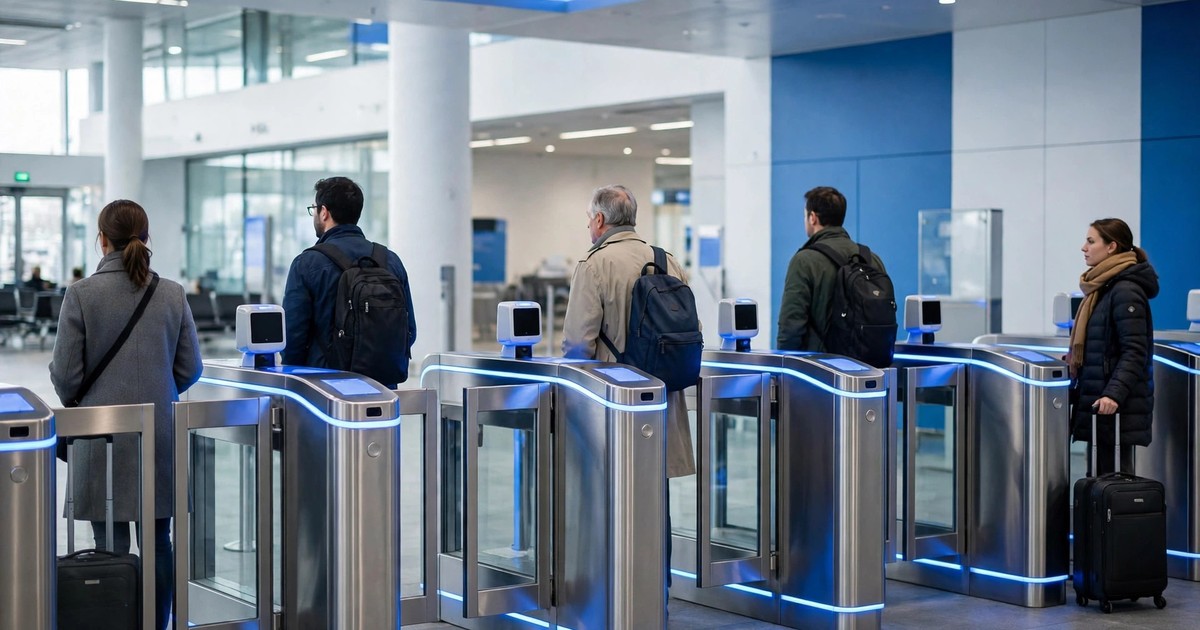
    The system operates at airports, seaports, land borders and international rail terminals, including juxtaposed controls for cross-Channel journeys, where checks happen before departure. Facilities differ: a major hub may have kiosks and e-gates, while a small land crossing may use a booth. During the phased introduction, procedures may vary, and some crossings may still stamp passports in a transition period.

    Build extra time into your first journey under the new system, particularly at busy periods. Early queues are usually about unfamiliarity and volume, not your documents.

    The End of Passport Stamps

    Once EES is fully in operation at a border, manual stamping of passports for travellers covered by the system is meant to end, because the electronic record replaces it. Your entry and exit history lives in the system rather than on your passport pages.

    Practically, you lose the informal proof stamps provided, so keep your own records: boarding passes, booking confirmations and a note of entry and exit dates. In return, problems with a missing or illegible stamp largely disappear once crossings are digital and timestamped by the system itself.

    During a phased rollout, practice may differ between borders — one airport may register you digitally while another still stamps. Follow local instructions on the day.

    How the 90/180 Day Rule Is Tracked Now

    The rule itself has not changed: visa-free short-stay visitors may spend up to 90 days in any rolling 180-day period in the Schengen area. What EES changes is enforcement and accuracy.

    Under stamping, counting days meant working backwards through stamps, sometimes across several trips. Under EES, the system calculates automatically, flags travellers with no days remaining or who have overstayed, and identifies entries with no matching exit.

    The informal flexibility some travellers assumed existed is gone. A miscounted week or a hope that a new passport resets the count will not survive a digital record. Use the EU’s official short-stay calculator where available, track your days, and remember they count across the whole area: a month each in Spain, France and Italy is 90 days used.

    An overstay can have serious consequences, including fines, removal and future entry bans, depending on the country and circumstances. If you realise you have a problem, taking legal advice early is far better than hoping the system has not noticed — under EES, it very likely has.

    EES vs ETIAS: Two Systems, Often Confused

    EES and ETIAS are frequently mentioned in the same sentence, which causes endless confusion. They are different systems doing different jobs, on different timetables.

    EES is a border system. It registers what actually happens when you cross: your entry, your exit and your biometrics. There is no application to complete in advance and no fee for being registered. You do not apply for EES; you are recorded by it at the border.

    ETIAS is a travel authorisation for visa-exempt visitors, similar in spirit to the US ESTA. Eligible travellers will apply online and pay a fee before travelling, receiving an authorisation linked to their passport. It is pre-travel screening, not a border record, with its own phased start arrangements.

    In plain terms: ETIAS, once it applies to you, is arranged before you fly; EES happens when you land. Many visitors will eventually deal with both, so check the official pages for each rather than social media summaries, which regularly merge them.

    Privacy and Data Retention in General Terms

    Because EES collects biometrics, privacy questions are reasonable and were part of the debate around its design. In general terms, the system is governed by EU law that sets out what data is collected, who may access it and how long it is kept.

    Under the official framework, EES records are retained for a defined period — generally three years from the relevant exit or entry record — with longer retention possible where there is no recorded exit, reflecting a possible overstay investigation. Access is limited to authorised bodies such as border, visa and immigration authorities, with law enforcement access under strict conditions. Travellers have rights in principle to access their data and request correction of inaccuracies.

    Exact retention periods and access conditions are legal details that can be amended, so treat this as a general picture, not legal advice. The official EU EES website and European Commission pages set out the current rules, and your own government’s travel advice usually summarises them for its citizens.

    Practical Tips to Avoid Delays

    • Arrive with time to spare. For your first EES crossing especially, allow extra time at the border, and avoid tight onward connections immediately after arrival.
    • Use the right lane and follow local instructions. Signage and staff will direct non-EU travellers to kiosks or booths. Procedures vary by airport and port during the rollout.
    • Have your documents ready. Passport in hand, and be ready to state your destination, length of stay and accommodation, just as officers have always been able to ask.
    • Keep your own day count. Track your Schengen days in a note or app, keep boarding passes and bookings, and never rely on a stamp — or its absence — as your record.
    • Do not try to game the system. A new passport, a land border instead of an airport, or a missing exit record does not reset your allowance under a linked digital system.
    • Check official sources before you travel. Rollout stages and temporary arrangements are updated on the EU’s official EES pages.

    Frequently Asked Questions

    Do I need to apply or pay for EES before I travel?

    No. EES is not an application or a visa. You are registered at the border when you cross, and there is no EES fee. The system people sometimes mean is ETIAS, which is separate and has its own application process and timetable.

    Will my passport still be stamped?

    Once EES is fully operating at the border you use, stamping for travellers covered by EES is intended to stop, because the digital record replaces it. During the phased introduction, practice may vary, so follow the procedure at your specific crossing.

    Does EES change how long I can stay in Europe?

    No. The 90 days in any 180-day period rule for short stays is unchanged. EES simply records and calculates it automatically, which makes accurate counting — and overstays — much easier to detect.

    What if the system shows a wrong entry or exit for me?

    Raise it with the border authority at the time if you can, keep your own evidence such as boarding passes and booking records, and use the official channels described on the EU EES pages to request correction of inaccurate data.

    Sources / Note

    This article is an original general explainer and does not replace official guidance. EES is being introduced in a phased, recent rollout, and start dates, participating borders and procedures have changed before and may change again; this article deliberately avoids presenting any single date as certain. Before travelling, check the EU’s official EES pages (travel-europe.europa.eu and related official EU pages), the official ETIAS pages, and your own government’s travel advice. Facts here should always be checked against those official sources.

  • Europe by Train: Interrail and Eurail Passes Explained for First-Timers

    Europe by Train: Interrail and Eurail Passes Explained for First-Timers

    There is a particular freedom that only rail travel gives you in Europe. You arrive in the centre of a city rather than at an airport on its edge, watch the landscape change from farmland to mountains to coastline, and can often decide in the morning to be in another country by lunch. For first-time visitors, a rail pass turns that idea into one simple ticket.

    Yet the two names on offer — Interrail and Eurail — confuse almost everyone at first. They sound like rival products, come in several versions, and whether a pass saves money has no single answer. This guide explains how they work, who each is for, what they really cost once reservations are added, and how to avoid common mistakes.

    Interrail vs Eurail: The Core Difference

    The most important fact is also the simplest: Interrail and Eurail are essentially the same system, sold under two names depending on where you live.

    Interrail is for people who live in Europe. Eligibility is based on residency, not just citizenship. If you are a European citizen living outside Europe, or a non-European citizen who legally lives in a European country, check the official eligibility guidance before you buy, because your country of residence decides which pass you need. An Interrail Global Pass is not meant for unlimited travel inside your own country of residence. It normally allows a limited number of travel days there — typically one outbound and one inbound journey — because the pass is designed for exploring other countries.

    Eurail is for people who live outside Europe. Visitors from the United States, Canada, Australia, India, Pakistan, Brazil, Japan and most other non-European countries buy a Eurail Pass instead. It works on the same trains, in the same countries, with the same basic rules, and without the home-country restriction, because your home country is outside the network.

    Once you are on the train, nobody can tell the two passes apart. The trains, app, reservation systems and travel days work the same way. Both cover more than thirty participating countries in recent years, including France, Germany, Italy, Spain, Switzerland, Austria, the Benelux and Nordic countries, much of Central and Eastern Europe, Greece and Turkey. Coverage can change, so confirm every country on your route is included.

    The Main Pass Types Explained

    Once you know your name — Interrail or Eurail — you choose the shape of the pass. There are two main decisions: how the travel days work, and how many countries it covers.

    Continuous vs Flexi Passes

    A continuous pass gives unlimited travel on every day of a set period, such as 15 days, 22 days, one month, two months or three months. If you plan to move almost every day and cover long distances, it can be excellent value and removes all counting.

    A flexi pass gives a set number of travel days to use within a longer period — for example 4, 5, 7, 10 or 15 travel days within one or two months. A travel day runs from midnight to midnight, and within it you can take as many trains as you like. Flexi passes suit most first-timers better, because real itineraries include sightseeing days and rest days when you never board a train. You only spend a travel day when you actually travel.

    A useful detail: on a direct night train departing after 7 p.m. and arriving after 4 a.m., only the departure day generally counts as a travel day. Confirm the current rule when you activate your pass.

    Global vs One-Country Passes

    A Global Pass covers the whole participating network and is right if your trip crosses borders — which most classic European rail trips do. A One Country Pass covers a single country, such as France, Italy, Spain or Germany, and can be cheaper if you are exploring one place in depth.

    You also choose first or second class. Second class in most of Western and Central Europe is comfortable, clean and perfectly adequate. First class usually means wider seats, more space and a quieter carriage. If your budget is tight, second class is rarely a bad strategy.

    Most passes are now mobile passes delivered to the official Rail Planner app rather than paper tickets. You add journeys in the app, activate a travel day, and show the generated ticket to the inspector.

    What Does a Pass Really Cost?

    Prices vary by age, class, duration and promotions. Youth discounts are usually available for travellers under 28, senior discounts may apply over 60, and young children often travel free with an adult pass holder, subject to conditions and reservation fees. Seasonal sales are common, especially outside peak summer, and can change the maths considerably.

    Judge value by your cost per travel day: divide the pass price by the travel days you will genuinely use. If that is less than your long journeys would cost as separate tickets, the pass probably wins; if you will only make two short hops, it probably does not. Remember, seat reservations and sleeper supplements add extra costs, explained below.

    Pass vs Point-to-Point Tickets: Which Is Cheaper?

    The truthful answer is that it depends on how you travel.

    A pass usually wins when:

    • You cover long distances or several countries in a short time.
    • You want flexibility to change plans or add a stop.
    • You book late, when advance fares have already risen.
    • Your route uses countries where walk-up fares are expensive, such as Switzerland or Germany.
    • You travel in peak season and want certainty about your budget.

    Point-to-point tickets usually win when:

    • Your itinerary is fixed and known months ahead, so you can buy cheap advance fares.
    • You are only making one or two journeys.
    • Your route is in countries where regional trains and advance tickets are inexpensive.
    • You are happy to commit to a specific train, date and time with no changes.

    Many experienced travellers mix the two: a shorter flexi pass for expensive international legs, and cheap advance tickets for short hops that would waste a travel day. Before buying, price your three or four longest journeys as individual tickets, add them up, and compare the total with the pass that would cover them. That simple exercise answers the question for your trip, not someone else’s.

    Seat Reservations: The Part Nobody Warns You About

    A pass gives you the right to travel; it does not always give you a seat. On many local and regional trains you simply board, activate your travel day and sit anywhere in your class. But on high-speed, long-distance and international trains in countries such as France, Italy and Spain, a seat reservation is often compulsory and costs extra on top of the pass.

    Fees vary widely — a small amount on some domestic services, noticeably more on popular international routes and premium services. Night trains require a reservation for a couchette or sleeper berth, and that supplement can be substantial. Some panoramic Swiss services also require reservations even though the pass covers the route.

    Build a reservation budget into your plan, book early for peak summer and weekends, and use official channels. Where a slower regional alternative needs no reservation — common in Italy and Germany — it can save the fee entirely. Never board a reservation-only train without one: inspectors can fine you or sell a full-price ticket.

    Popular Routes for a First Trip

    The grand capitals loop: Paris, Brussels or Amsterdam, then Cologne and Berlin, with London possible via Eurostar subject to its reservation and supplement rules. Fast, frequent trains make this ideal for a first flexi pass.

    The Alpine route: Munich, Innsbruck, Verona and Venice, or Zurich through the Swiss Alps to Milan. Mountain scenery from the window is the whole point, and Swiss and Austrian railways are famously reliable.

    The Mediterranean arc: Barcelona, southern France, the Italian coast, Rome, Florence and Venice. Beautiful, but plan reservations carefully, because Spanish, French and Italian long-distance trains are the ones most likely to require them.

    Central Europe in depth: Prague, Vienna, Budapest and Krakow. Distances are manageable, cross-border fares without a pass add up, and the cities reward slow travel.

    The northern journey: Copenhagen, Stockholm and Oslo, with long scenic rail lines. Travel days here cover very long distances, which is exactly where a pass earns its money.

    Practical Tips for Using Your Pass

    Plan in the app, but check the operator. The Rail Planner app works offline for timetables, which is invaluable, but cross-check important connections with the national railway’s own site or app, especially during engineering works or strikes.

    Activate carefully. Only activate your pass and a travel day when you are sure you are travelling. An activated day generally cannot be undone, and activating the pass starts its overall validity period.

    Keep your phone alive. A mobile pass means your phone is your ticket. Carry a power bank and keep the app updated; inspectors will want the live ticket in the app.

    Arrive a little early at big stations. Hubs such as Paris Gare du Nord or Roma Termini are cities in themselves. Give yourself time to find the platform.

    Mind the border basics. A rail pass is a transport ticket, not a visa. You remain responsible for passports, entry rules and any travel authorisation your nationality requires.

    Use travel days wisely. Group short journeys into the same day where possible, save travel days for long legs, and use city transport passes or walking on non-travel days.

    Common Mistakes First-Timers Make

    The most common mistake is buying the biggest pass out of enthusiasm and using only half of it. Count your realistic moving days first, then buy. The second is forgetting reservations and discovering at the platform that the fast train to Paris or Rome needs one. The third is wasting a travel day on a 40-minute hop that would have cost very little as a separate ticket.

    Other errors include assuming every train is covered — some private, airport and tourist trains are not — forgetting Eurostar quotas and supplements, travelling with an unactivated pass, and leaving no buffer before a flight home.

    Frequently Asked Questions

    Can I buy both Interrail and Eurail and choose later?

    No. You buy the one matching your country of residence: Interrail if you live in Europe, Eurail if you live outside it. They cover the same network, so there is no advantage in holding the other version.

    Does a rail pass include Eurostar to London?

    Passes can be used on Eurostar, but a separate reservation is compulsory, pass-holder places are limited, and you should book well in advance, especially in summer. Check the current conditions before counting on this route.

    What happens if my train is cancelled or I miss a connection?

    Keep your travel day activated, speak to station staff, and take the next available service where possible. Staff across Europe deal with this daily. Note announcements if you later need to explain a delay to customer service.

    Is first class worth it?

    For most first-timers, second class is good value and entirely comfortable. First class is a nice upgrade on long days, busy routes or special scenic journeys, but rarely essential. Spend the difference on reservations, food or an extra night instead.

    Sources / Note

    This article is an original general guide for planning purposes. Pass types, prices, discounts, participating countries, reservation rules and night-train conditions change regularly. Before buying, check the official Interrail website (interrail.eu) and the official Eurail website (eurail.com), plus the national railway operator for each country on your route, for current prices, eligibility and reservation requirements. Facts in this article should always be checked against those official sources before you travel.

  • Best European Cities to Visit in 2026, Ranked by Budget

    Best European Cities to Visit in 2026, Ranked by Budget

    Europe in 2026 offers more choice than ever: new rail links, restored old towns, and a fresh wave of neighbourhood food markets. The challenge is not finding a great city — it is finding the right city for your budget, pace, and interests.

    This guide ranks twelve standout cities by budget, not in a single “best overall” table. A city perfect for a careful backpacker may feel limiting for a couple celebrating a special occasion, while an expensive capital can be worth a short, focused splurge. The three tiers — budget-friendly, mid-range, and splurge — let you compare like with like.

    How We Ranked These Cities

    Our ranking is based on relative value, not exact prices. Costs change by season, neighbourhood, and how far ahead you book, so no single price is guaranteed. We looked at five factors: cost of stay for a clean, well-located room; food, meaning everyday bakeries, markets, and casual restaurants; transport, including walkability and affordable transit; attractions, especially free or clustered sights; and overall value — atmosphere, cultural depth, and day trips.

    Use the tiers as a starting point. A budget city in peak August can cost more than a mid-range city in February, and a splurge city can be manageable for two or three planned nights.

    Budget-Friendly Cities

    These cities give you more days and experiences for the same spend. They suit longer trips, solo travellers, and anyone who prefers spending on experiences over accommodation.

    Krakow, Poland

    Krakow is one of Europe’s most complete budget choices. Its Old Town is compact and walkable, centred on a vast medieval market square. Wawel Castle sits a short stroll away, and Kazimierz, the former Jewish quarter, offers galleries and relaxed restaurants.

    Best for history lovers and first-time visitors to Central Europe. Food is a highlight for the price, from Polish classics and traditional milk bars to affordable modern bistros.

    Money-saving tip: Stay in Kazimierz or Podgorze, just outside the centre. You can still walk everywhere, but rooms and cafes tend to be better value.

    Budapest, Hungary

    Budapest delivers grandeur on a budget. The Danube divides hilly Buda, with its castle district and views, from flat Pest, with its boulevards, ruin bars, and parliament building. Thermal baths are the signature experience.

    Best for architecture, nightlife, and spa lovers, and for couples wanting romance without Paris-level costs. Eating out ranges from goulash to excellent international options in the Jewish Quarter.

    Money-saving tip: Get a transport pass if crossing between Buda and Pest often, and visit baths on weekday mornings when they are quieter.

    Porto, Portugal

    Porto has the charm many expect from Lisbon, often with a gentler pace and better value. Ribeira tumbles down to the Douro River in colourful houses, while across the bridge, port cellars offer tours and tastings. Tiled churches and viewpoints reward slow wandering.

    Best for food and wine lovers and travellers who prefer a smaller, walkable city. Many highlights — river walks, viewpoints, tiled facades — cost nothing.

    Money-saving tip: Make lunch your main meal. Midday menus are fuller and better value, leaving evenings for a light meal and a riverside stroll.

    Sofia, Bulgaria

    Sofia is one of Europe’s most underrated capitals. Roman ruins, golden-domed churches, and wide boulevards sit in an easy-to-navigate centre. The Alexander Nevsky Cathedral is unmissable, and Mount Vitosha offers a quick escape into nature.

    Best for curious travellers who like thinner crowds, and for combining a city break with hiking. Cafes are plentiful and affordable, and museums are modestly priced.

    Money-saving tip: Use Sofia as a base. Day trips to Rila Monastery or Plovdiv add a lot without changing hotels.

    Mid-Range Cities

    These cities cost more, especially for central rooms, but reward it with exceptional museums, food, and transport. With planning, they remain manageable.

    Prague, Czech Republic

    Prague feels like a storybook, but it is also a serious cultural capital. The Charles Bridge, Old Town Square, Prague Castle, and the lanes of Mala Strana could fill several days. Beyond the centre, Vinohrady and Zizkov offer parks, cafes, and beer halls with a more local feel.

    Best for couples and architecture fans wanting a classic city break. The centre can be busy, so timing and neighbourhood matter.

    Money-saving tip: See the famous sights early, then spend afternoons in less central districts where cafes offer better value.

    Valencia, Spain

    Valencia is Spain’s relaxed Mediterranean alternative to its bigger rivals, with a historic old town, a long sandy beach, and the futuristic City of Arts and Sciences set in a park in a former riverbed. It is also the home of paella, best eaten at lunchtime near the sea.

    Best for families, food lovers, and anyone wanting city and beach in one trip. Cycling is easy and food markets are excellent for self-catering.

    Money-saving tip: Rent a bike for the park and beach — faster than walking and cheaper than repeated taxis.

    Berlin, Germany

    Berlin offers enormous value for a major capital. Its museums on Museum Island, memorials, parks, and diverse neighbourhoods could fill a week: Mitte for history, Kreuzberg for food and nightlife, Prenzlauer Berg for leafy, family-friendly streets.

    Best for history and art lovers and travellers who enjoy exploring by neighbourhood. Food is a strength at every level, from Turkish markets to modern German restaurants.

    Money-saving tip: Look into museum passes and free or late openings where available, and cluster visits by area.

    Athens, Greece

    Athens is far more than a stopover before the islands. The Acropolis dominates the skyline, but the pleasure is in the neighbourhoods below: Plaka’s lanes, Monastiraki’s flea market, and Koukaki’s tavernas.

    Best for history and food lovers extending a Greek trip by a few days. Spring and autumn offer the best balance of weather and costs.

    Money-saving tip: Buy combined archaeological tickets when they fit your plan, visit the Acropolis early or late, and eat away from the busiest squares.

    Splurge Cities

    These are Europe’s icons — expensive, especially centrally and in peak season, but unforgettable for a short stay. Choose a few priorities and enjoy them properly.

    Paris, France

    Paris needs little introduction: the Eiffel Tower, Notre-Dame, the Louvre and Musée d’Orsay, and neighbourhoods from Montmartre to Le Marais. It rewards travellers who slow down.

    Best for art lovers, couples, and first-time visitors wanting the classic experience. Picnics, free church interiors, and walks along the Seine cost little and are memorable.

    Money-saving tip: Stay near a Metro line rather than in the most famous postcode, and make breakfast a bakery croissant — simple, Parisian, and far cheaper than hotel breakfasts.

    London, United Kingdom

    London is vast and packed with free major museums, from the British Museum to the National Gallery and Tate Modern. Add West End theatre, markets, royal parks, and neighbourhoods as different as Notting Hill and Greenwich, and you could return for years.

    Best for theatre and museum lovers and families. Accommodation is the biggest cost, so location and booking timing matter most.

    Money-saving tip: Plan days around free museums and parks, use contactless transport payment for daily caps where they apply, and book theatre tickets ahead.

    Amsterdam, Netherlands

    Amsterdam’s canals, gabled houses, and cycling culture make it instantly distinctive. The Rijksmuseum and Van Gogh Museum are essential, while the Jordaan and Nine Streets offer browsing and cafe culture. Haarlem and Utrecht make easy day trips.

    Best for art fans and travellers who like a compact, photogenic city. Central accommodation is pricey, so book early.

    Money-saving tip: Stay in Amsterdam Noord or outside the canal ring and cycle in — more space for your money and a more local feel.

    Copenhagen, Denmark

    Copenhagen is the splurge choice for design, food, and quality of life. Nyhavn’s coloured harbour, Tivoli Gardens, modern architecture, and a celebrated food scene — from bakeries to innovative restaurants — make it polished and calm, and highly cycle-friendly.

    Best for design and food lovers who appreciate a relaxed, well-organised break. It is rarely a bargain, but quality is consistently high.

    Money-saving tip: Use bakeries and food halls for one meal a day, rent a bike, and prioritise two or three paid attractions.

    Best Time to Go

    Late spring (May to early June) and early autumn (September to early October) offer the best balance for most cities: pleasant weather and fewer crowds than summer. July and August bring festivals and beach weather in Porto, Valencia, and Athens, but also the highest prices.

    Winter is excellent value in Krakow, Budapest, Prague, and Berlin, where Christmas markets and cosy cafes suit the season. Paris, London, Amsterdam, and Copenhagen work year-round, and winter savings can make a splurge trip more affordable.

    Getting Around

    Europe’s great advantage is rail. Many cities connect easily by train — Berlin to Prague, Krakow to Budapest, and high-speed services in Spain and France — often more conveniently than flying. Book longer journeys ahead, and consider a rail pass only for several long trips in a short period.

    Within cities, walking is best for the centre. Add trams, metros, and buses with day passes in larger cities like London, Berlin, and Paris. In Porto, Valencia, Amsterdam, and Copenhagen, cycling is a genuine transport option.

    How to Build a 2026 Trip Plan

    Start with your tier, not ten cities. Pick one base matching your budget and interests, then add at most one or two nearby stops by train. A week works beautifully as Krakow plus Budapest, Valencia with day trips, or London plus Paris. Rushing wastes money and energy on transport.

    Next, set a daily spending shape rather than a single total, with separate rough envelopes for accommodation, food, transport, and attractions. Book rooms and long-distance transport first. Leave one unplanned half-day per city — accidental discoveries often become the best memories.

    Finally, check 2026 practicalities before booking: museum opening days, closures, public holidays, and entry requirements for your nationality.

    Money-Saving Tips That Work Everywhere

    Travel off-peak when you can, and be flexible by a day or two on transport. Stay one transit stop outside the centre. Make lunch your main restaurant meal, and use markets and bakeries for others. Refill a reusable bottle where tap water is drinkable. Try free walking tours and museum days, and buy a city card only if it matches your real plan. Spend deliberately: one great museum or meal you care about beats five rushed ones.

    Frequently Asked Questions

    Which European city is best for a first trip on a tight budget?

    Krakow is a strong first choice: walkable, rich in history, and excellent value for rooms and food.

    Is it cheaper to visit one city or several in one trip?

    Usually one or two. Every move adds transport and transfers, while staying longer in one base unlocks better deals and day trips.

    When should I book for 2026 to get better value?

    Book accommodation and long-distance transport a few months ahead for peak months. Desirable areas in Paris, London, Amsterdam, and Copenhagen sell out early year-round.

    Are city passes worth it?

    Only if you will visit several included attractions and use its transport. Add up your realistic plan first; if the pass is not clearly cheaper, pay as you go.

    How many days do I need in each city?

    Two to three days suit Porto or Sofia. Allow three to four for Prague, Budapest, Athens, or Amsterdam, and four or more for London, Paris, and Berlin.

    Sources and Note

    Prices, opening times, transport, and entry requirements vary by season and provider, sometimes at short notice. These tiers describe relative costs in general terms, based on widely available travel information at the time of writing; they do not guarantee what you will pay.

    Before travelling, check official city tourism boards for attractions, official transport operators for passes and timetables, and reputable booking sources for live availability. For entry rules, rely on official government guidance for your nationality.