
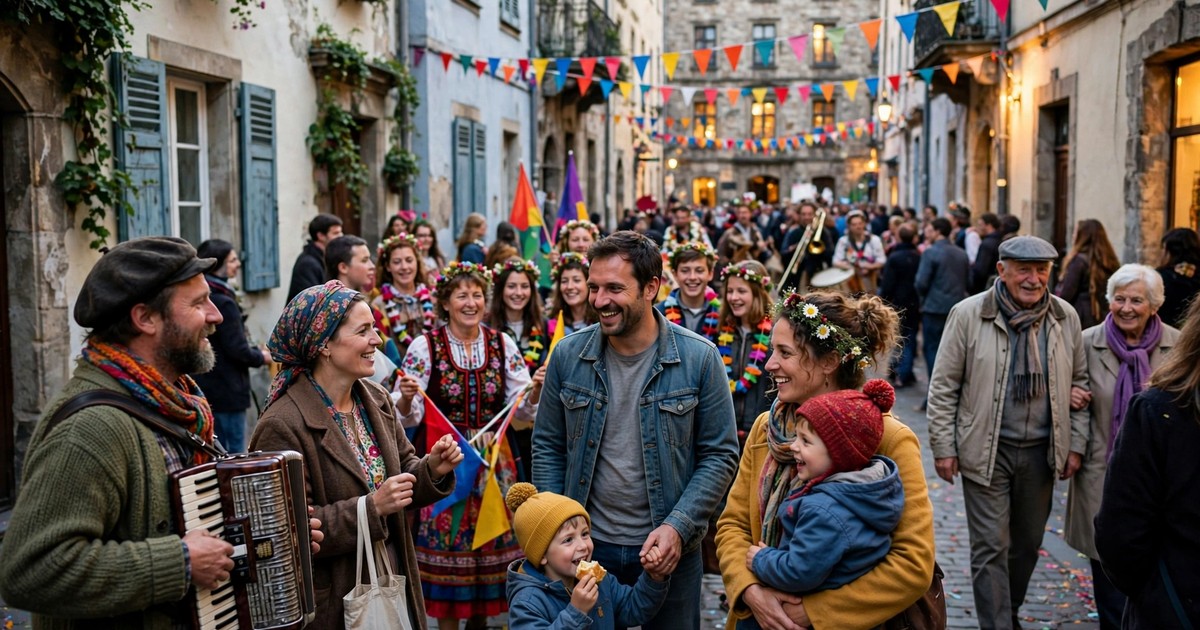
Europe does not have one calendar. It has dozens — national holidays, regional holidays, religious feasts, school breaks, and city festivals that can fill a town with music for a week or close almost everything for a day. Arrive at the right moment and you might find a carnival parade, a midsummer bonfire, or streets decorated for a national day. Arrive unprepared on a major public holiday and you might find closed museums, reduced trains, and the most expensive hotel prices of the year.
This guide walks through the year month by month, explains the major holidays, introduces famous festivals, and shows how to plan around — or deliberately for — the busiest dates. Dates move from year to year, especially those linked to Easter, so always check official dates for the year you travel.
How Public Holidays Work in Europe
Most European countries have between nine and fifteen public holidays a year. Some are nationwide; others apply only to a region, city, or religious community. Spain’s autonomous communities, Germany’s federal states, Switzerland’s cantons, and the United Kingdom’s constituent nations all have variations, so a shop closed in one city may be open in the next.
Many holidays are Christian in origin — Christmas, Easter, Epiphany, Assumption, All Saints — while others mark national history: independence days, republic days, and liberation days. When a holiday falls on a weekend, some countries move the day off to a Monday or Friday; others do not. People also often “bridge” a Tuesday or Thursday holiday by taking the day in between off, creating a four-day weekend that fills trains and roads.
The Year at a Glance: Month by Month
January
New Year’s Day on 1 January is a public holiday almost everywhere, with many businesses closed and transport on a Sunday service. Epiphany on 6 January is a holiday in countries including Spain, Italy, Austria, Poland, and Greece; in Spain it is a major gift-giving day, with Three Kings parades on 5 January. Orthodox Christmas falls on 7 January in some traditions. Otherwise January is quiet, cold, and relatively cheap for city travel, apart from ski resorts.
February
February is carnival season in many Catholic regions, with dates tied to Lent and changing each year. It is also a school holiday period in several countries, making Alpine ski areas busy and pricey. Expect short days in the north and some smaller beach-resort attractions still closed for winter.
March
St Patrick’s Day on 17 March is a public holiday in Ireland and a widely celebrated festival in Dublin and beyond. Depending on the year, Easter can fall in late March. Spring opens gardens and outdoor terraces in southern Europe, while the north can still feel wintry. Prices are usually moderate outside Easter week.
April
Easter dominates, with Good Friday, Easter Sunday, and Easter Monday observed in different combinations across countries. Holy Week processions in Spain are a major draw. King’s Day in the Netherlands on 27 April turns cities orange with street parties and flea markets. Tulip season and spring festivals make April popular without summer crowds.
May
May Day on 1 May is a public holiday in most of Europe, often with parades, concerts, and some closures. United Kingdom bank holidays, Victory in Europe commemorations around 8 or 9 May, Ascension Day, and Whit Monday create long weekends whose pattern varies by country. May is one of the best months to travel: warm in the south, green in the north, and usually cheaper than summer.
June
Midsummer is the highlight in Scandinavia and the Baltic states, celebrated around the solstice, typically the weekend nearest 19–25 June, with maypoles, bonfires, and countryside gatherings. National days include Italy’s Republic Day on 2 June, Sweden’s National Day on 6 June, and Portugal Day on 10 June. Corpus Christi is a holiday in several Catholic regions. Days are longest and prices start to climb.
July
France’s Bastille Day on 14 July brings fireworks and parades, and Belgium’s National Day follows on 21 July. Spain’s Running of the Bulls takes place during San Fermín in Pamplona in early to mid-July. School holidays begin across most of the continent, beaches fill, and this is peak season for prices and crowds, especially in the Mediterranean.
August
August is Europe’s traditional holiday month. Many locals, particularly in France, Italy, and Spain, take annual leave; some independent businesses close for part of the month, and resorts are at their busiest and most expensive. Assumption Day on 15 August is a public holiday in many Catholic countries and marks the height of Italy’s Ferragosto period. Edinburgh’s festivals dominate Scotland’s capital all month. Capitals can feel oddly calm while coasts are packed.
September
September offers a sweet spot: warm seas, harvest season, and falling prices as schools return. Germany’s Oktoberfest actually begins in mid-September in Munich, and grape harvest festivals appear in wine regions across Europe. Cultural seasons reopen in many cities.
October
Oktoberfest usually ends in early October, around German Unity Day on 3 October. Halloween on 31 October is increasingly celebrated but is a public holiday in only a few places. Autumn colours, food festivals, and lower prices make October attractive, though northern days shorten quickly.
November
All Saints’ Day on 1 November is a public holiday in many Catholic countries, when cemeteries are visited and some businesses close. Remembrance commemorations fall on 11 November in France, Belgium, and the United Kingdom. Lantern processions for St Martin’s Day and the traditional opening of carnival season on 11 November in parts of Germany add local colour. Late November sees Christmas markets begin in many German, Austrian, and Central European cities. Otherwise November is one of the cheapest months.
December
December is defined by Christmas markets, St Nicholas traditions around 5–6 December in the Netherlands, Germany, and elsewhere, and St Lucia in Sweden on 13 December. Christmas Day on 25 December and St Stephen’s Day or Boxing Day on 26 December are major holidays when almost everything closes. New Year’s Eve on 31 December brings fireworks and large celebrations, with some cities requiring tickets for central zones. Book December travel early.
Major Holidays Explained
New Year customs differ: Hogmanay in Scotland lasts several days, Spain eats twelve grapes at midnight, and many cities stage official fireworks. Easter is movable, calculated from the spring full moon, which is why it shifts between late March and late April and why carnival, Lent, and Holy Week shift with it. Orthodox Easter often falls on a different date from Western Easter, which matters in Greece and parts of Eastern Europe.
May Day combines labour marches with older spring customs such as maypoles in Germany and Austria and lilies of the valley in France. Christmas is family-centred almost everywhere; in much of Central and Northern Europe the main celebration is on Christmas Eve, 24 December, which can mean early closures even where it is not a formal holiday. National days — France on 14 July, Spain on 12 October, Italy on 2 June, and many others — usually mean parades, flags, special museum programmes in some capitals, and closed offices.
Famous Festivals Worth Planning Around
Carnival takes many forms. Venice Carnival, in the weeks before Lent, fills the city with masks and costume balls and pushes hotel prices sharply upward. Carnivals in Cologne, Düsseldorf, and Mainz feature parades on Rose Monday, while Nice and cities across France and Spain hold versions with floats and satire. Each is a local European tradition in its own style, quite different from the others — and from Rio-style carnivals elsewhere in the world.
Oktoberfest in Munich, from mid-September to early October, is the world’s best-known beer festival, with large tents, traditional dress, and millions of visitors; book accommodation months ahead. La Tomatina in Buñol is a one-day tomato-throwing festival in late August with ticketed, capped entry. Edinburgh in August hosts the Fringe, the International Festival, and the Royal Edinburgh Military Tattoo at once, effectively doubling the city’s population. Scandinavian midsummer, Spain’s Holy Week, King’s Day, and countless local wine, music, and film festivals reward travellers who check a city’s events calendar before fixing dates.
How Holidays Affect Transport, Shops, and Sightseeing
On a public holiday, expect a Sunday pattern: reduced transport timetables, closed banks, post offices, government offices, and many smaller shops, and in some countries closed supermarkets. Large shopping centres, transport-hub shops, and tourist-area restaurants often stay open, but do not rely on it. Museums vary — some close on Mondays anyway, some open on holidays and close the following day, and some offer special programmes. Pharmacies operate emergency rotas.
The days around a holiday can matter more than the day itself. Trains and flights book out before long weekends, motorways jam on getaway afternoons, and attractions sell timed tickets faster. Conversely, business districts can be pleasantly quiet, and business hotels sometimes discount even as leisure resorts raise prices.
Planning Around — or Avoiding — Peak Dates
Start by checking three calendars for your destination: national public holidays, regional holidays, and school holidays, plus the city’s festival dates. If your goal is a festival, embrace the peak: book transport and accommodation early, consider staying near a transport line rather than in the very centre if prices are extreme, and reserve headline attractions in advance.
If your goal is sightseeing at lower cost, travel just before or after a major event, choose weekdays over the holiday weekend, and consider second cities without the headline festival. Shoulder months — May, June, September, and early October — offer the best balance of weather, open attractions, and manageable prices in much of Europe. Whenever a date is described as “typical,” confirm it: Easter-based feasts move, and festivals occasionally change weekends.
Regional Differences to Keep in Mind
Religion, history, and federal structure explain most variation. Catholic regions observe Epiphany, Corpus Christi, Assumption, and All Saints more widely; Protestant regions may mark Reformation Day or Whit Monday; Orthodox countries follow a different Easter pattern. Within one country, Bavaria has more holidays than Berlin, and Scotland differs from England. Never assume one city’s holiday timetable applies in the next, even across a short border.
Frequently Asked Questions
How can I find the exact public holidays for my trip?
Check the official government or national tourism website for your destination country and region, and confirm the year of travel. Holidays that fall on weekends, regional holidays, and one-off changes are usually listed there, and festival organisers publish confirmed dates each year.
Are shops and museums closed on every public holiday?
Not always, and not everywhere. Banks, offices, and smaller shops commonly close, while major attractions, transport-hub shops, and tourist-area businesses may open with reduced hours. Always check the specific venue’s holiday hours before planning a day around it.
Is it better to travel during a festival or avoid it?
It depends on your goal. Festivals offer atmosphere you cannot get at any other time, but they bring higher prices and larger crowds. If the festival is not your reason for going, travelling a week earlier or later usually gives you the same city with lower costs and easier bookings.
Why do Easter and carnival dates change every year?
They are calculated from the lunar-linked church calendar rather than fixed dates. Easter Sunday is set by the first full moon of spring, and carnival, Lent, Ascension, and Pentecost are counted from Easter, so the whole group of holidays moves together each year.
Sources / Note
This guide is based on general information published by European tourism boards, government holiday calendars, city authorities, and festival organisers. Holidays and festival schedules change yearly and differ between countries and regions, so verify exact dates and opening arrangements on official sources for your year and destination. Dates given as months or typical periods are indicative only. This article is general travel information, not an official calendar.
Leave a Reply